How to Make Money With AI Voiceovers (Beginner Guide)
How to turn AI voiceovers into paid work: the services to sell, the tools to check and where to find first clients.
You can make money with AI voiceovers by selling finished narration to people who need audio but don’t want to book a studio. Think YouTube channels, course creators, small businesses, and ad makers. The work is easy to start, but most guides skip one catch. The license on your AI voice tool has to cover how your client will use the audio. This guide shows what to sell, which rules to follow, which tools to use, where to find clients, and how to price your work.

Can You Really Make Money With AI Voiceovers?
It’s possible, but it isn’t easy money. Clients pay for narration that sounds clean, matches their script, and arrives on time. Fiverr’s voice-over hiring page lists voice synthesis as its own service. The page (titled for 2025) shows an average fee of about $35 per voice synthesis job and about $73 per human voiceover job, so check the current figures yourself.
Keep that number in perspective. It’s an average per job, not a paycheck. Your income depends on how many clients you find, how many revisions you do, and what tools and platform fees cost you. Nobody can promise you a monthly figure, and this guide won’t try.
Example (hypothetical): A course creator has ten short lessons and no recording gear. They’d rather pay one person to turn the scripts into clean audio, fix a few mispronounced terms, and send back ten files. That’s the kind of job a beginner can win.
What Can You Sell With AI Voiceovers?
Start with one service. A narrow offer is easier to explain, sample, and price.
- Video narration: explainer videos, product demos, and YouTube channels that need a steady voice.
- E-learning modules: training lessons for course creators and company teams, often dozens of files in the same voice.
- Short ads: social clips and promos. Ask your tool’s support whether broadcast use, such as TV or radio, is covered.
- Phone and app prompts: short lines like “Your order has shipped,” voiced the same way every time.
- Audiobooks (handle with care): Audible’s ACX says submitted audiobooks must be narrated by a human unless otherwise authorized. Other retailers have their own rules, so read each one before you narrate a whole book.
Want to narrate for faceless channels? Our guide to starting a faceless YouTube channel with AI shows where voiceover fits. Still choosing your first service? An AI voiceover side hustle works best when you focus on one thing.
Check the License Before You Sell Anything
Every AI voice tool has its own commercial-use rules, and they change by plan. Client work is almost certainly commercial use, so read the terms before you quote a price.
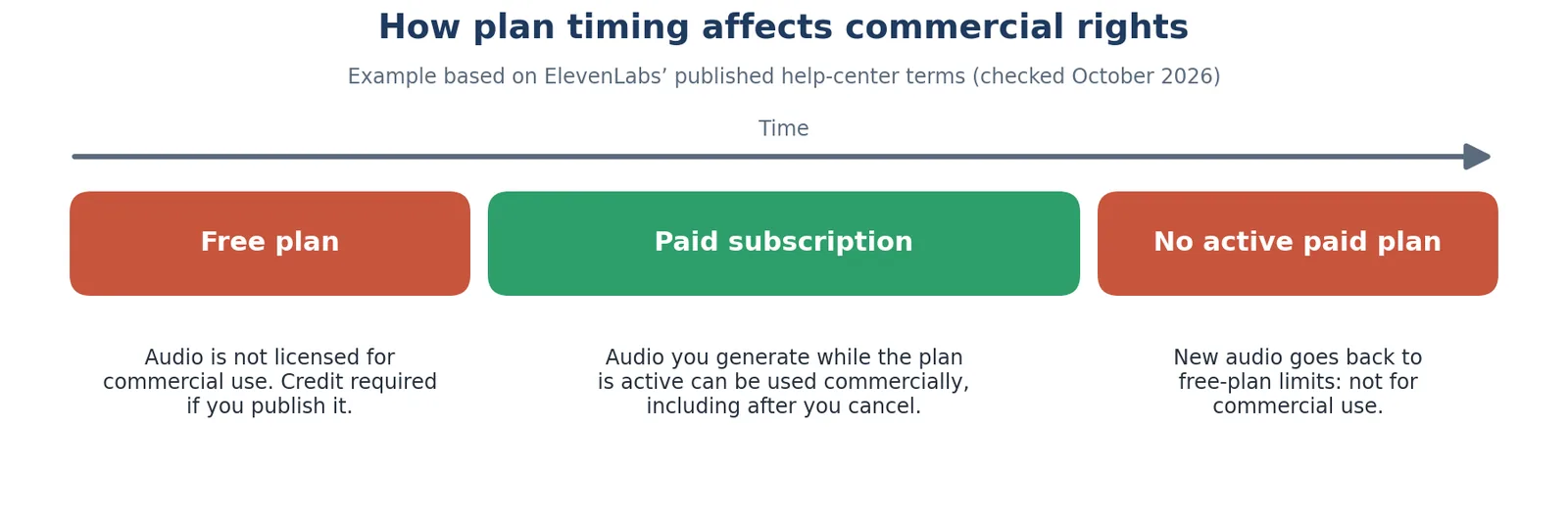
ElevenLabs is a clear example. Its free plan has no commercial license, and you must credit ElevenLabs when you publish. Paid plans include a commercial license, but audio made outside a paid subscription can’t be used commercially, even if you upgrade later. Output from beta features is excluded too. ElevenLabs explains this in its help center.
Murf’s help center says all paid plans include commercial rights. It also tells users to check the AI-voice policy of any platform where they publish, since those policies keep changing.
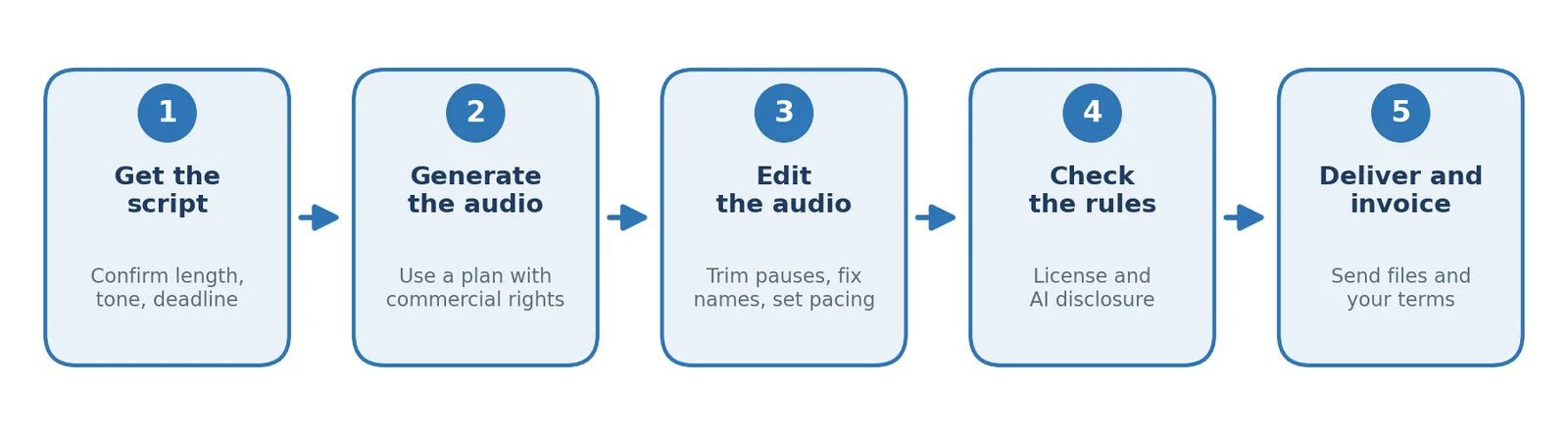
Before you deliver any file, ask three questions:
- Was this audio made while my paid plan was active?
- Does the license cover audio I hand over to a client?
- Are there limits for ads, broadcast, or resale?
Save a dated screenshot of the terms with each project. If a dispute comes up later, you’ll have proof of what the license said.
Do You Have to Tell People the Voice Is AI?
Sometimes the platform decides for you. YouTube requires creators to disclose realistic content that was meaningfully altered or generated with AI, and the wording has been updated more than once. According to YouTube, disclosing doesn’t limit a video’s audience or its eligibility to earn money. Read the current help page before each new client project.
Even where no rule applies, being upfront builds trust. Add one line to your contract saying the narration is AI-generated and who handles any disclosure where the video is published. That way, nobody is surprised later.
Example clause (hypothetical, have a lawyer review it): “The narration in this project is generated with AI text-to-speech. The client is responsible for any disclosure required on the platform where the content is published.”
Tools for AI Voiceover Work
There’s no single best AI voice generator for everyone. Pick a plan that includes commercial rights, then test the same short script in two or three tools. Here’s how three popular options compare on the point that matters most.
Three AI voice tools for client work (terms checked October 2026)
| Tool | Best for | What to check |
|---|---|---|
| ElevenLabs | Natural-sounding narration; voice cloning on some plans | Free plan has no commercial license and requires credit. Paid plans include one, except for beta features. |
| Murf | Business, training, and marketing narration; shared team workspaces | Paid plans include commercial rights. Check each publishing platform’s AI-voice rules. |
| Resemble AI | Developers and business clients who need an API or custom voices | Confirm current pricing and terms. Check its terms before cloning any voice. |
Pair your generator with a free editor like Audacity. Use it to trim long pauses, slow down rushed lines, and fix mispronounced names. That editing step is often what makes a voiceover sound intentional instead of robotic.
Where to Find AI Voice Over Jobs
Marketplaces are the easiest place to sell AI voiceovers at first. Fiverr has a voice-over category that includes voice synthesis. On Upwork, you can send proposals to clients who post jobs.
Direct outreach works too. Look for small YouTube channels with no narration, online course creators, and agencies that produce videos. Keep your first sample under a minute, and base it on text the client has already published.
Sample message (hypothetical): “Hi [Name], I watched your video on [topic] and noticed it has no narration. I made a 30-second sample of your intro with a clean AI voice. Would you like to hear it?”

How to Price AI Voiceover Work
You can charge per project, per finished minute, or per word. Per project suits small jobs like a single video. Per minute or per word fits longer work like course modules.
Price for finished work, not for how fast the tool runs. You’re paid for checking the script, fixing pronunciation, editing, and handling revisions. Build your tool subscription, your editing time, and any marketplace fee into your quote.
Example (hypothetical math, not a market rate): A client sends a 600-word script. At about 150 words per minute, that’s roughly four minutes of audio. If you charge $10 per finished minute, your quote is $40, including one round of pronunciation fixes. Compare your number with similar listings before you commit.

Risks and Honest Expectations
AI voiceover is a competitive space, and the rules keep changing. Tools can disappear, too. Meta acquired the team behind PlayHT in July 2025, and reports say the PlayHT service has since shut down. Don’t build your whole business on one vendor, and don’t count on steady orders in your first weeks.
Ownership is a gray area as well. The U.S. Copyright Office says copyright protects human authorship and doesn’t extend to purely AI-generated material. Your own script work and editing may count for more, but that’s decided case by case. Spell out in your contract what the client receives, and don’t promise exclusive rights you can’t give.
Freelance income is usually taxable. U.S. readers can start with the IRS self-employed individuals tax center. Elsewhere, check your country’s tax authority, keep records of income and tool costs, and talk to a qualified tax professional.
Frequently Asked Questions
Can you sell AI-generated voiceovers commercially?
Yes, if your tool’s license covers it for the plan you use. ElevenLabs and Murf both limit commercial rights to paid plans, so check the terms for your plan before you quote work.
Do I have to tell clients the voice is AI?
You should. It’s good practice, and it keeps your contract clear. Some platforms ask for disclosure too. YouTube, for example, requires it for realistic content that was meaningfully altered or generated with AI. Check the current rules where your client will publish.
How much do AI voiceover jobs pay?
It varies a lot. Fiverr’s voice-over page (titled for 2025) shows an average of about $35 per voice synthesis job, but that’s an average, not a promise. Use current listings, plus your own time and costs, to set your rates.
Which AI voice tool is best for beginners?
The best AI voice generator is the one whose paid plan includes commercial rights and sounds right for your clients. ElevenLabs and Murf are fair places to start testing, since both say paid plans include commercial use. Compare current terms and pricing before you commit.
Can I clone someone’s voice for a client?
Only with that person’s clear, written permission. ElevenLabs’ terms of use, for example, say a voice model needs audio of your own voice or a voice you are authorized to share. Laws about voice likeness are changing, so ask a lawyer if you’re unsure.
Conclusion
You can make money with AI voiceovers without a studio or a trained voice. What protects you is the less exciting part: confirm commercial rights, plan for disclosure, and edit every file before you deliver it. Do those three things and you’re building a real service, not a one-off gig.
Your next step: this week, pick one service from the list above, make a 60-second sample on a plan that includes commercial rights, and send it to three people who might need it.
Was this article useful?
Thanks, that helps us decide what to write next.
Spotted a mistake? Report an error and we will fix it, with a dated correction note.