How Do Robo-Advisors Use AI? A Beginner’s Guide
How robo-advisors use algorithms to build and manage portfolios, and what they cannot guarantee.
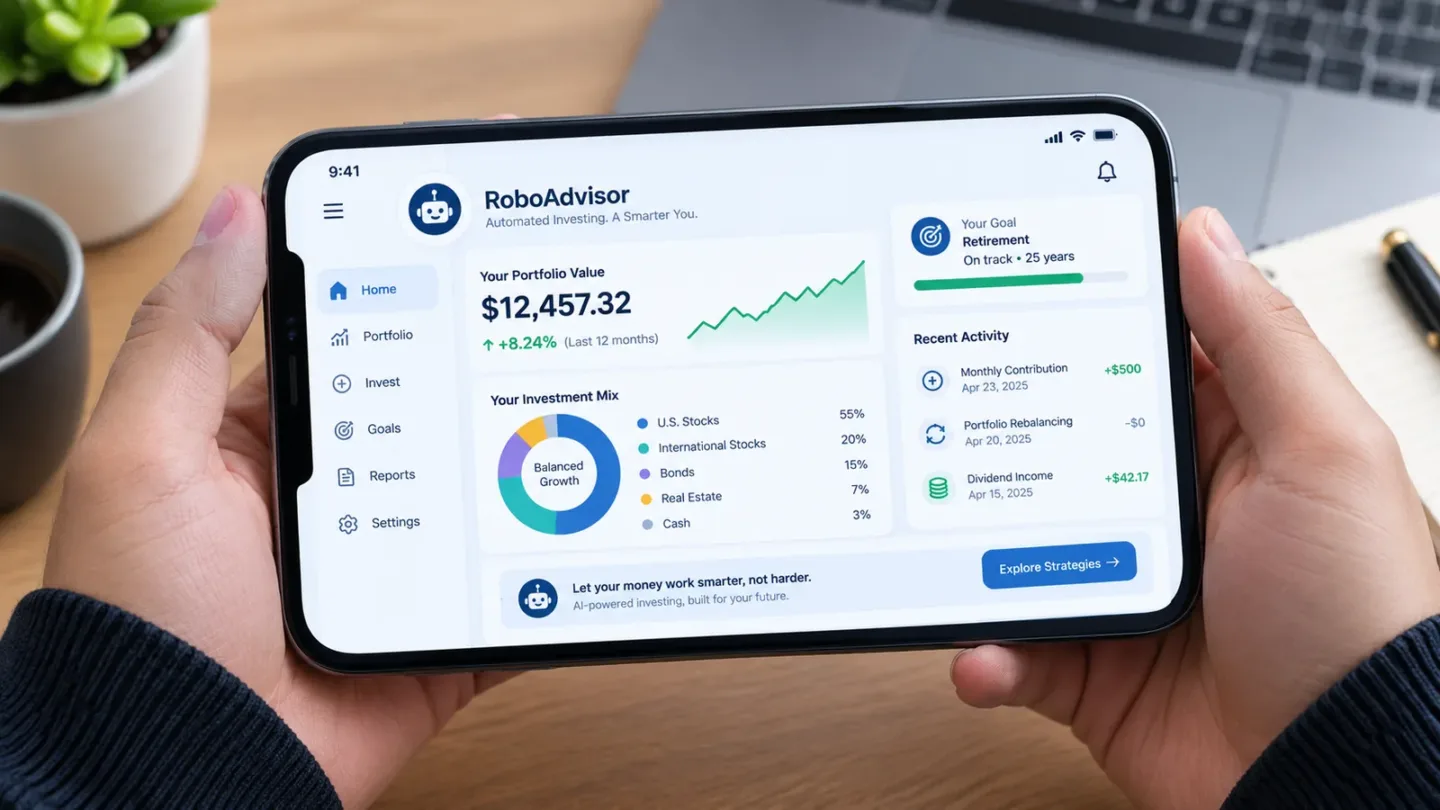
Understanding how robo-advisors work, and how they use AI, starts with a simple idea: these platforms automate your daily investment strategy using specific algorithmic techniques, such as Modern Portfolio Theory and automated tax-loss harvesting. They handle the heavy lifting of building, balancing, and managing your portfolio entirely behind the scenes.
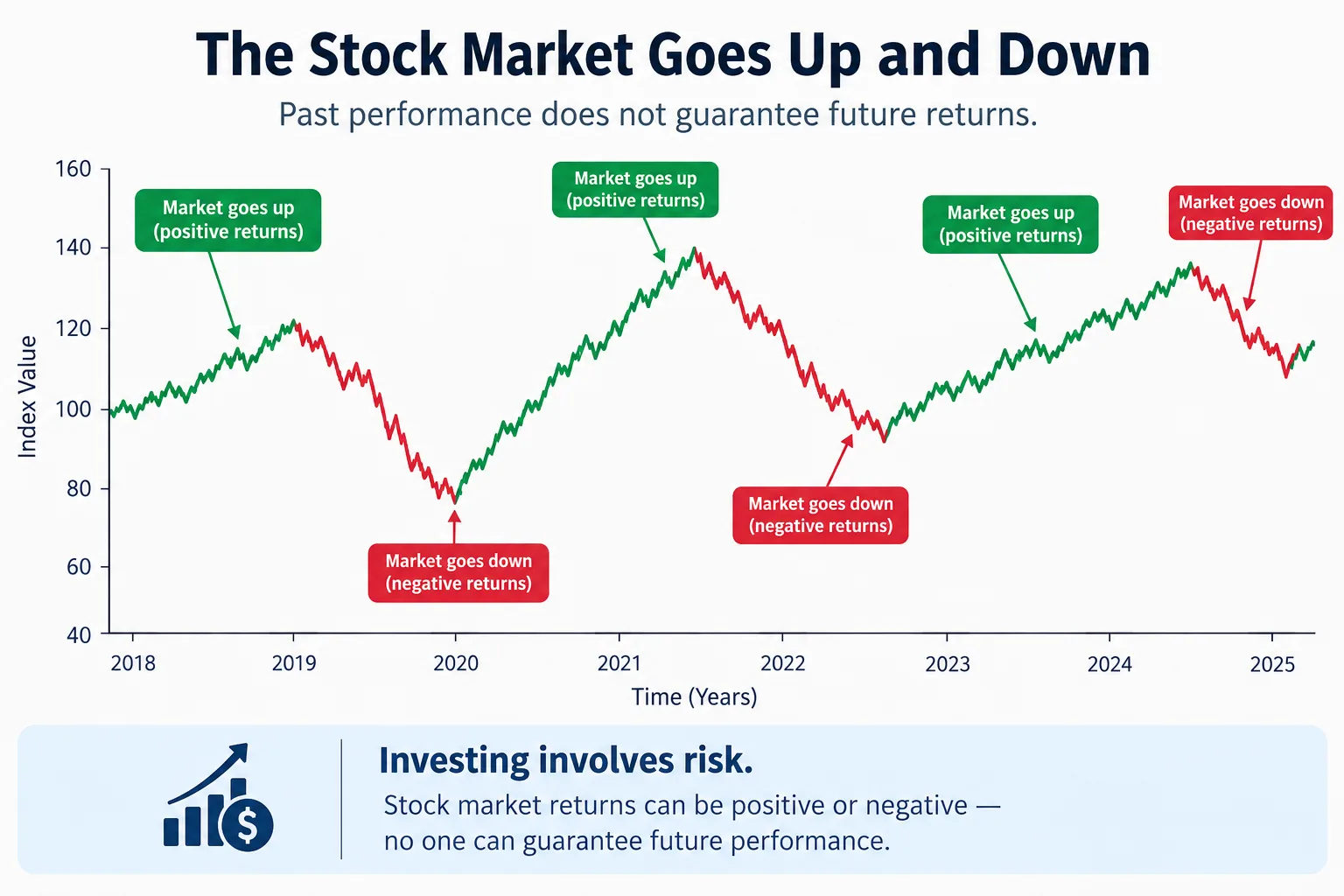
However, it is vital to state plainly: robo-advisors cannot guarantee positive returns, and past performance never guarantees future results. Market volatility affects algorithms just like human brokers, making risk management the primary focus of their design.
Below, we break down exactly how these automated investment platforms work, the AI driving them, and whether they are right for your financial journey.
1. What Is a Robo-Advisor?
A robo-advisor is an automated investment platform that uses algorithms to build and manage your financial portfolio. Instead of paying a human financial planner to pick individual stocks, you rely on software to execute a mathematically driven investment strategy.
These platforms were created to democratize investing, making wealth management accessible to everyday people. They typically require very little starting capital and charge significantly lower fees than traditional advisory firms.
When you use an automated investment platform, you step away from day-to-day trading decisions. According to FINRA’s investor guidance on automated tools, these platforms rely on predefined rules and historical market data to guide your money. For example, a first-time investor with just $10 can open a Betterment account and have that money placed into a diversified portfolio the same day — a level of access that was rare before robo-advisors existed.
This hands-off approach removes emotional decision-making from the investing process. By relying on cold, hard data, the AI helps prevent panic-selling during a market crash or buying into a hype bubble.
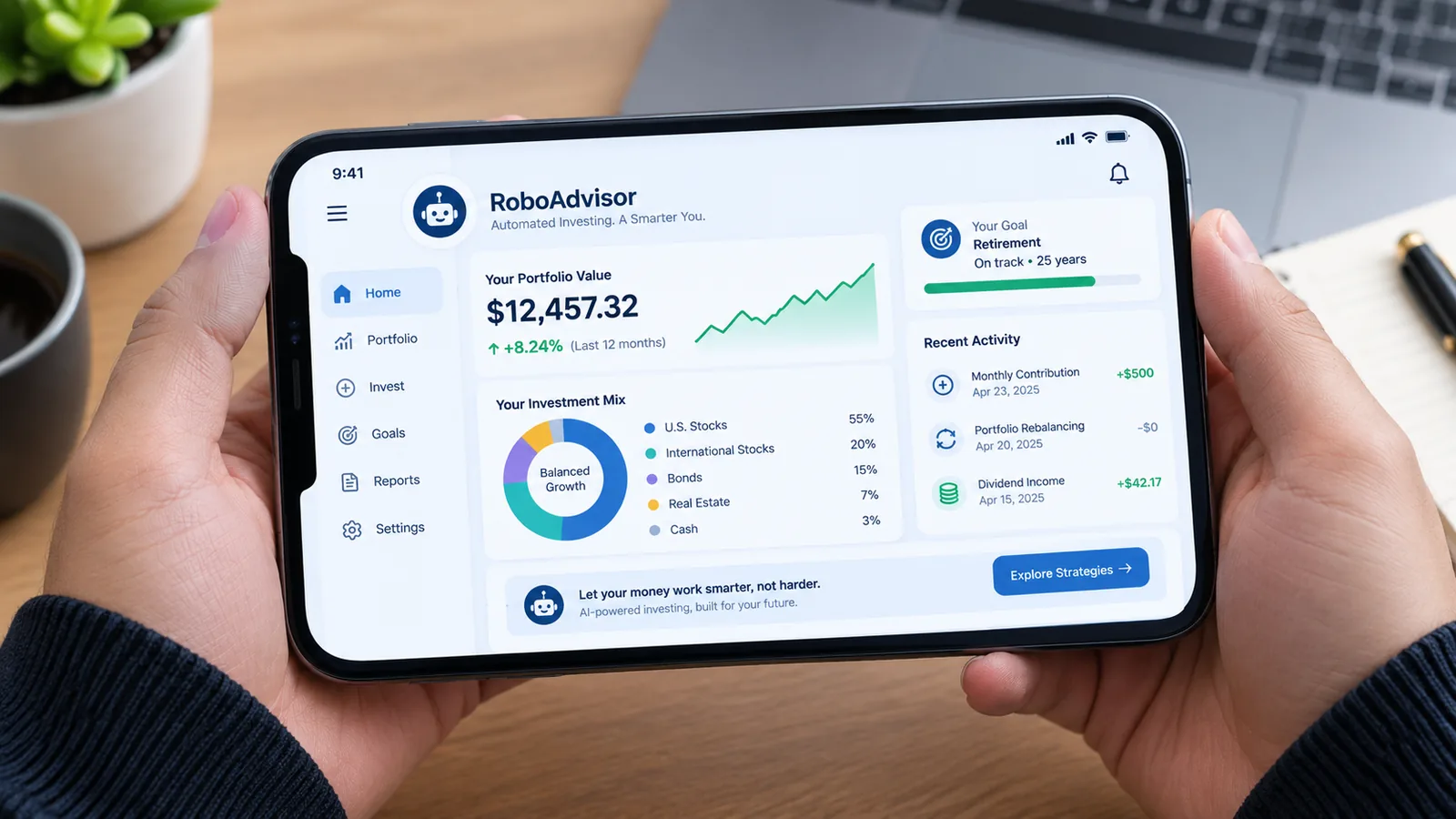
2. How Robo-Advisors Work, Step by Step
Automated platforms follow a strict, sequential process to transition your cash into a diversified portfolio. The entire setup is designed to be completed from a smartphone or laptop in under fifteen minutes. Here is the step-by-step breakdown of how the AI profiles you and puts your money to work.
Questionnaire & Risk Profiling
The process always begins with an intake questionnaire. The platform asks about your age, income, financial goals, and comfort level with market volatility. This is the foundational data the algorithm uses to understand your specific needs.
Based on your answers, the software calculates your personal risk profile. The algorithm evaluates your “time horizon” — how long you plan to leave the money invested. If you are young and saving for retirement in 30 years, the platform assigns you a high-risk, high-reward profile. If you are close to retirement, it assigns a conservative profile focused on preserving the capital you already have.
Table: How Algorithms Score Your Risk Profile
| Questionnaire Factor | Answer | Algorithmic Risk Assessment | Target Asset Focus |
|---|---|---|---|
| Time Horizon | 20+ Years | High Risk Capacity | Equities (Stocks) |
| Time Horizon | < 5 Years | Low Risk Capacity | Fixed Income (Bonds) |
| Market Drop Reaction | “Buy more” | High Risk Tolerance | Emerging Markets / Tech ETFs |
| Market Drop Reaction | “Sell everything” | Low Risk Tolerance | Government Bonds / Cash |
| Primary Goal | Growth / Retirement | Moderate to High | Broad Market Index Funds |
| Primary Goal | Buying a house soon | Very Low | High-Yield Cash / Short-term Bonds |
Portfolio Construction (ETFs/Index Funds)
Once your risk profile is established, the algorithm builds your portfolio. It does this using Exchange-Traded Funds (ETFs) or index funds. These funds pool together hundreds or thousands of stocks and bonds, providing instant diversification without the need to buy individual company shares.
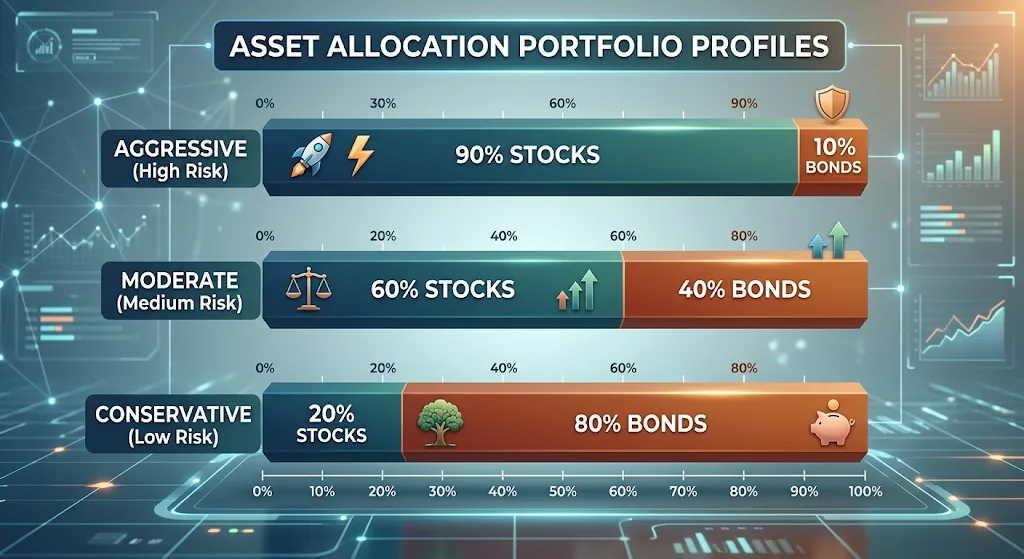
For illustration only: an aggressive portfolio might be allocated to 90% stock ETFs and 10% bond ETFs, while a conservative portfolio might flip that ratio completely. The specific funds chosen are typically low-cost, highly liquid assets that track major global markets, such as the S&P 500 or total international stock indices.
Graph: Asset Allocation by Risk Profile
Ongoing Automated Management
After your initial funds are invested, the robo-advisor monitors your portfolio continuously. It tracks market movements, processes new deposits, and automatically reinvests any dividends you earn. You simply set up a recurring bank transfer and let the software work in the background.
This ongoing management requires zero input from the user. The algorithms operate 24/7, reacting to market shifts based on strict mathematical rules. They do not watch the news, and they do not make gut-feeling trades. Everything is dictated by the initial parameters set during your onboarding.
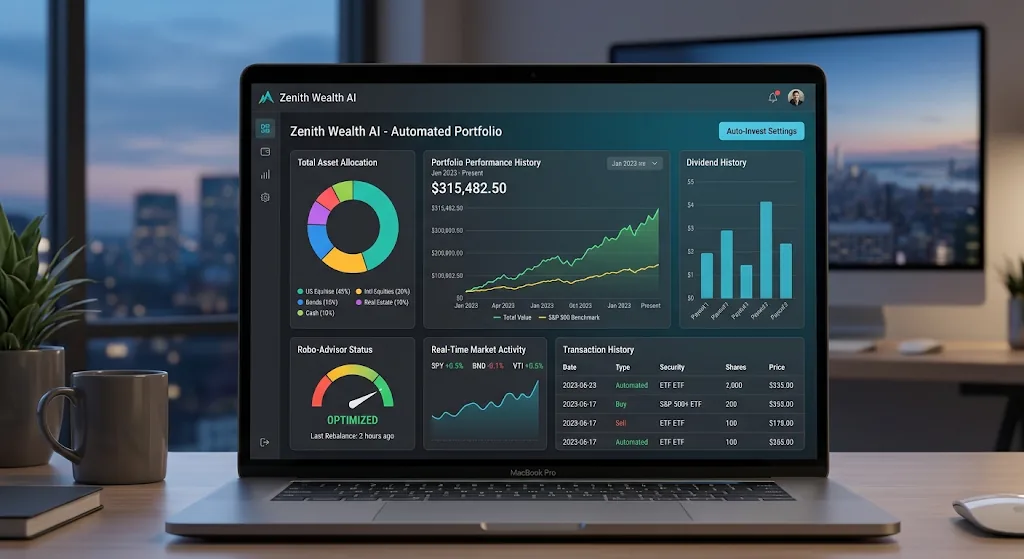
3. The Core AI and Algorithmic Functions Behind Robo-Advisors
While the term “AI” is often used as a marketing buzzword, robo-advisors rely on highly specific, mathematically proven algorithms. These core functions are what separate modern automated investing from traditional, manual stock picking.
Modern Portfolio Theory
Modern Portfolio Theory (MPT) is a Nobel Prize-winning mathematical framework developed by Harry Markowitz. It forms the primary “brain” of almost every major robo-advisor on the market today. MPT is designed to maximize your expected return for a specific, targeted level of risk.
Instead of trying to find the single best-performing stock, MPT focuses on how different assets interact with one another. It builds what’s called an “efficient frontier” — in plain terms, the mix of investments that historically delivered the highest expected return for a given level of risk, based on how those assets have moved in relation to each other during market stress.
For example, by balancing volatile assets (like emerging market stocks) with stable ones (like US Treasury bonds), the algorithm smooths out the ride. The goal is to capture steady, long-term market growth rather than chasing short-term windfalls that carry catastrophic risk.
Table: The Impact of Modern Portfolio Theory on Volatility
| Portfolio Type | Asset Mix | Expected Annual Return | Historical Volatility (Risk) | AI Logic |
|---|---|---|---|---|
| Concentrated Stocks | A handful of large-cap tech stocks | 12.5% (hypothetical) | Very High (20%+) | Too concentrated. Vulnerable to sector crashes. |
| MPT Optimized | 60% Global Stocks, 40% Bonds | 8.0% (hypothetical) | Moderate (8–10%) | Balances risk. Bonds stabilize stock drops. |
| 100% Cash | Savings Account | 4.0% (hypothetical) | Zero (Inflation Risk) | Loses purchasing power over time. |
Automated Rebalancing
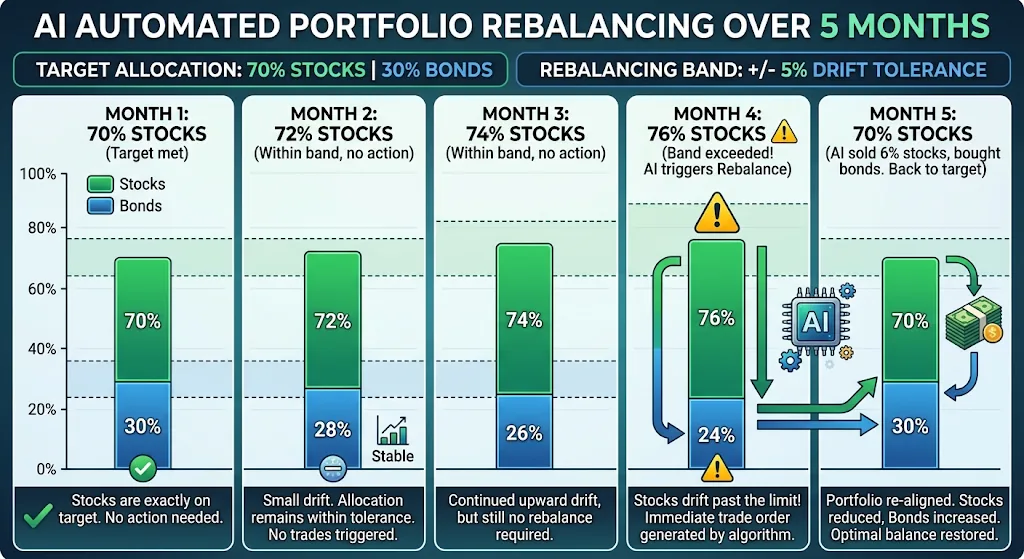
Over time, daily market movements will alter your original asset allocation. If tech stocks have a massive rally, your intended 80% stock portfolio might drift up to 88% stocks. This exposes you to significantly more risk than you originally agreed to during your questionnaire.
Robo-advisors use rebalancing algorithms to fix this automatically. They rely on “rebalancing bands” — in plain terms, preset percentage limits that trigger a trade once your portfolio drifts too far from target. For example, if the software detects a 5% drift from your target allocation, it triggers an immediate rebalance.
The algorithm automatically sells the assets that have grown too large and uses that cash to buy the assets that have shrunk. This forces you to routinely sell high and buy low, maintaining your intended risk profile without requiring any manual calculation or emotional stress on your part.
Graph: How Rebalancing Bands Trigger Action
Tax-Loss Harvesting
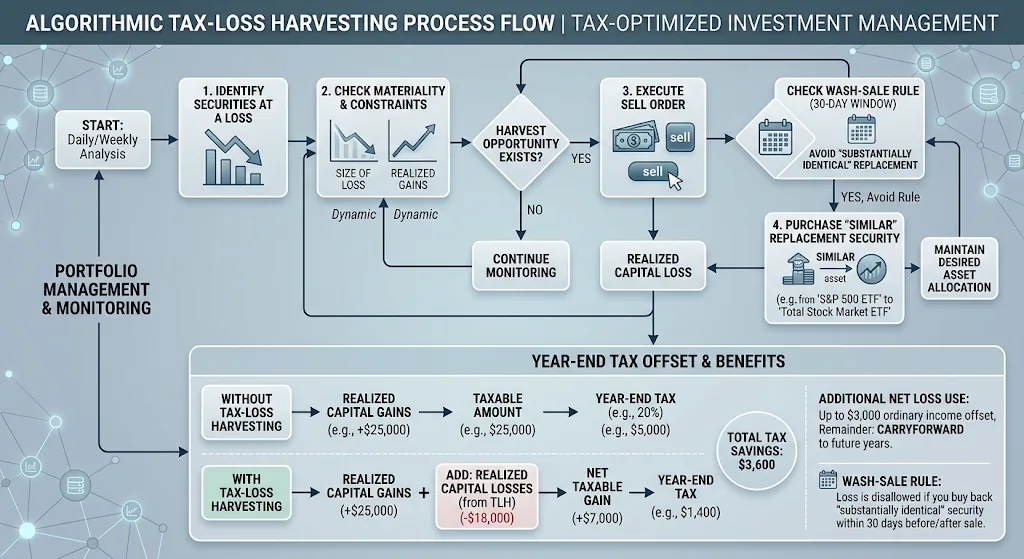
Tax-loss harvesting is a complex strategy that AI executes with precision. When an investment in your portfolio loses value, the robo-advisor automatically sells it to lock in that capital loss. This “harvested” loss can be used to offset taxes on your capital gains, potentially saving you money at tax time.
To keep your portfolio balanced, the algorithm immediately reinvests that cash into a similar asset. However, it must navigate the IRS “wash-sale rule” — in plain terms, a rule that blocks you from claiming the tax deduction if you buy a “substantially identical” asset within 30 days of the sale.
The robo-advisor’s algorithm avoids this by swapping the sold ETF for a carefully selected proxy fund. Your portfolio maintains its market exposure, you claim the tax deduction, and you stay compliant with IRS regulations — something that would be tedious to track by hand.
Table: AI Tax-Loss Harvesting and Wash-Sale Avoidance
Hypothetical example for illustration only — not an actual client account or a projection of results.
| Step | Action Taken by Robo-Advisor AI | Reason | IRS Compliance |
|---|---|---|---|
| 1 | AI detects a Vanguard S&P 500 ETF (VOO) position has dropped by $1,000 (hypothetical). | Opportunity identified. | N/A |
| 2 | AI automatically sells the VOO shares, locking in the $1,000 loss. | Harvests loss to lower your tax bill. | Legal capital loss generated. |
| 3 | AI instantly buys a Schwab Large-Cap ETF (SCHX) with the cash. | Maintains the portfolio’s exposure to large US companies. | Avoids wash-sale: SCHX tracks a different index than VOO, so it is generally not treated as “substantially identical” (the IRS has no bright-line test, so confirm with a tax professional). |
4. Is AI Investing Right for Beginners?
Figuring out how AI investing works can feel intimidating at first, but these platforms are explicitly designed for newcomers. AI investing for beginners removes the steep learning curve traditionally associated with the stock market. You do not need to read balance sheets, track moving averages, or understand complex financial jargon.
Consider a 24-year-old who has never owned a stock. By opening an account with a platform like Fidelity Go — which charges no advisory fee on balances under $25,000 — they can answer a short questionnaire and have a diversified portfolio built the same day, with no prior investing knowledge required.
Investing with AI is ideal if you lack the time or desire to actively manage money. It fits people who want a reliable “set it and forget it” strategy. If your primary goal is long-term wealth accumulation for retirement or a major future purchase, the automated approach provides a highly disciplined framework.
Conversely, if you enjoy picking individual stocks or want total control over every single trade, automated platforms will frustrate you. They intentionally restrict your ability to tinker with the core portfolio — which means sacrificing direct control for the sake of long-term algorithmic stability.
5. Pros of Robo-Advisors
Automated investing solves many traditional finance problems, which makes it worth understanding what these platforms do well before deciding if one is right for you.
- Low Fees: Automated platforms charge a fraction of what traditional human financial advisors charge. This leaves significantly more money in your account to compound over the decades.
- Low Minimums: Many platforms allow you to start investing with $0 to $10. This makes wealth building accessible to any income bracket, not just the wealthy.
- 24/7 Access: Your portfolio is managed around the clock. You can view your real-time performance, deposit funds, or adjust goals via mobile apps at any moment.
- Hands-Off Setup: The technology removes the stress of executing trades. It handles reinvesting dividends and managing tax efficiency without ever bothering you.
6. Cons of Robo-Advisors
Automated investing also introduces distinct limitations, and understanding them is critical before handing over your hard-earned capital — especially if you’re the kind of investor who wants more hands-on control.
- Limited Personalization: Algorithms place you in broad mathematical categories. They cannot account for the nuance of a highly specific, unique financial situation or family dynamic.
- Cannot Handle Complex Situations: Robo-advisors cannot help you with estate planning. They cannot optimize complex business taxes or help you navigate the financial fallout of a divorce settlement.
- No Return Guarantee: The software follows market trends. If the global economy crashes, your automated portfolio will decline right along with it.
- Lack of Human Empathy: During a severe market downturn, an algorithm cannot talk you out of panic-selling your assets. There is no human voice to reassure you that markets historically recover.
Table: Robo-Advisor Expectations vs. Reality
| What Beginners Expect | What Actually Happens |
|---|---|
| AI will predict the market and beat it. | AI tracks the market and matches its average return. |
| The algorithm protects me from losing any money. | The algorithm manages risk, but you will still see losses during recessions. |
| I can ask the app to buy Tesla or Apple stock. | You cannot pick stocks. The app buys broad ETFs. |
| It handles all my financial planning needs. | It only handles investment management. It ignores debt, mortgages, and insurance. |
7. Can a Robo-Advisor Guarantee Your Returns?
A robo-advisor absolutely cannot guarantee investment returns — this is a dangerous myth worth addressing plainly. Automated platforms are deeply tied to the broader financial markets, so when the market goes down, the value of your portfolio goes down too.
During the 2022 market downturn, for example, when the S&P 500 lost close to 18% for the year, robo-advisor portfolios holding similar assets declined by a comparable amount. That’s a useful reminder: automation manages risk, but it does not eliminate it.
The AI does not predict the future, nor does it have secret knowledge of impending market crashes. It uses historical data to manage risk, but it cannot override global economic realities. If you’re wondering what else technology can handle beyond portfolios, check out a deeper guide on whether AI can manage your money to see its broader limits.
Graph: Market Reality vs. Algorithmic Control
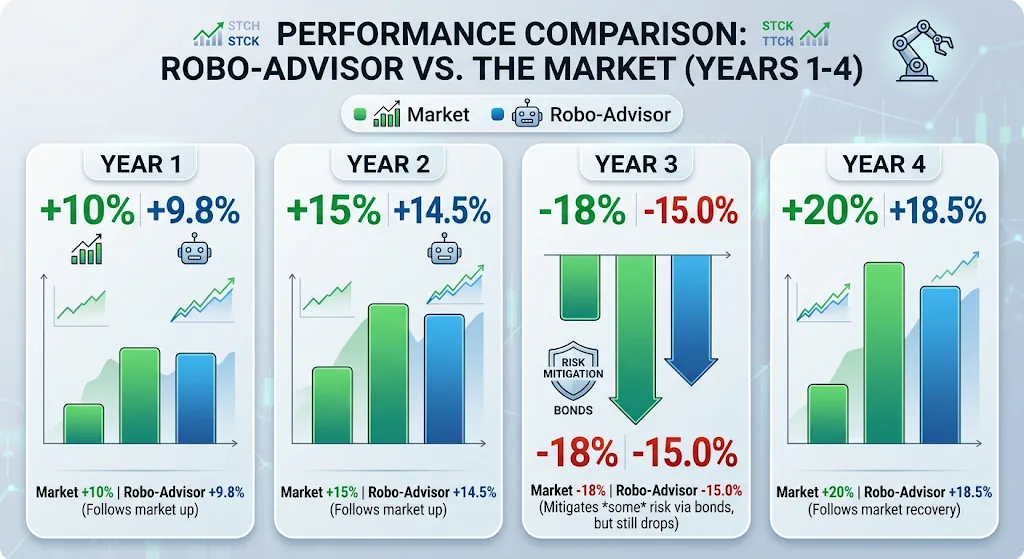
What a robo-advisor does guarantee is mathematical consistency. It guarantees that your assets will remain balanced according to your risk tolerance, and that you won’t take on more exposure than necessary during turbulent times — but it will never promise you a specific profit margin.
8. Robo-Advisor vs. Human Advisor vs. Hybrid: How to Choose
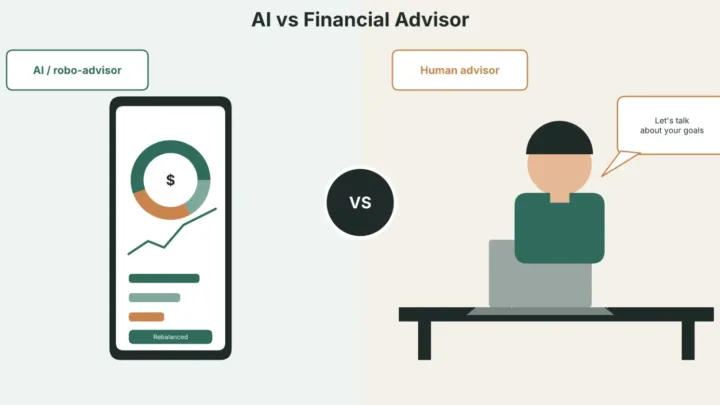
Choosing how to manage your money depends on the complexity of your life and the size of your portfolio. Before deciding on pure automation, it helps to weigh an AI vs. financial advisor comparison to see whether a human touch or code fits your long-term goals better.
The table below compares the three models side by side. In short: a pure robo-advisor is usually the most cost-effective choice for straightforward, long-term investing; a human advisor makes sense once your finances involve complex tax, estate, or business considerations; and a hybrid model splits the difference by pairing algorithmic management with occasional access to a Certified Financial Planner (CFP).
For example, a 35-year-old with a single retirement account and no dependents is usually well served by a pure robo-advisor. A business owner selling a company and navigating a multi-million-dollar estate, on the other hand, typically needs the tax and legal expertise only a human advisor can provide.
Table: The Advisory Decision Matrix
Fee and minimum ranges are approximate industry figures, not quotes from any single provider; actual costs vary by firm and account size.
| Feature | Robo-Advisor (AI Only) | Human Advisor (Traditional) | Hybrid Model (AI + Human) |
|---|---|---|---|
| Best For | Beginners, simple wealth building, hands-off investors. | High-net-worth individuals, complex estates, business owners. | Investors who want automation but occasional human reassurance. |
| Average Fee | ~0.20% to 0.35% annually | ~0.75% to 1.50% annually | ~0.30% to 0.80% annually |
| Account Minimum | $0 to $500 (varies by provider) | Often $100,000 to $500,000+ | Often $25,000 to $50,000 |
| Investment Strategy | Purely algorithmic (ETFs and index funds). | Custom asset selection, stocks, alternative investments. | Algorithmic ETF base with minor human adjustments. |
| Financial Planning | Basic digital goal calculators. | Comprehensive tax, estate, and life-event planning. | Access to a Certified Financial Planner (CFP) for check-ins. |
| Emotional Support | None — you interface with an app. | High — can talk you out of bad decisions during panics. | Moderate — you can schedule a call if you are stressed. |
A note on high-net-worth investors: Billionaires and other high-net-worth individuals generally don’t use consumer robo-advisors. They typically work with dedicated wealth management firms, private banks, and family offices that provide bespoke tax, estate, and investment services — a different tier of service built for a different scale of wealth.
9. What Fees and Minimums Should You Expect?
The primary advantage of automated platforms is their cost efficiency. By removing the expensive human element, they pass savings onto the consumer. However, management fees and entry requirements vary significantly across the industry’s biggest providers.
The differences between giants like Betterment, Wealthfront, Vanguard, Fidelity, and Schwab are worth understanding before you open an account.
Table: Fee and Minimum Comparison for Top Robo-Advisors
Figures below reflect published pricing as of April 2026 and are subject to change; confirm current terms on each provider’s site before opening an account.
| Platform | Annual Management Fee | Account Minimum | Key Differentiator & Best Use Case |
|---|---|---|---|
| Betterment | 0.25% (or a flat monthly fee for smaller balances without recurring deposits) | $0 ($10 to start) | Goal-based tracking, fractional shares, socially responsible portfolios. Best for absolute beginners starting with a small amount. |
| Wealthfront | 0.25% | $500 | Automated daily tax-loss harvesting and direct indexing at $100,000+. Best for maximizing tax efficiency. |
| Vanguard Digital Advisor | ~0.15% | $100 | Backed by the pioneer of low-cost index funds. Best for those who want a simple, low-cost, buy-and-hold approach. |
| Fidelity Go | 0% under $25,000; 0.35% above | $0 ($10 to start) | Zero advisory fees for investors building their first $25,000. Uses Fidelity’s zero-expense-ratio mutual funds. |
| Schwab Intelligent Portfolios | 0% (no management fee) | $5,000 | Charges no advisory fee, but keeps a portion of your portfolio in cash, which can act as a drag on returns. |
Source: NerdWallet, “Best Robo-Advisors: Top Picks for Automated Investing 2026” (accessed September 2026).
⚠ Past performance is not indicative of future results, and fees, minimums, and product terms change frequently. Always verify current pricing directly with the provider before investing.
When comparing these options, consider how much cash you have ready to invest today. A platform like Betterment or Fidelity Go is a reasonable fit for those starting from zero, while Vanguard and Schwab reward those with a larger initial commitment.
Graph: The Impact of Fees Over 20 Years
Fees look small, but they compound. The SEC’s investor education site shows a hypothetical $100,000 growing 4% a year for 20 years: with a 0.25% yearly fee it ends near $208,000, and with a 1.00% fee it ends near $179,000, a gap of roughly $29,000 (Investor.gov, Understanding Fees). A robo-advisor at about 0.25% and a human advisor at about 1% sit at those two ends, though real results depend on returns and on what each advisor does for you.

10. FAQ
Do robo-advisors use AI?
Yes, but primarily in the form of complex, rule-based algorithms rather than generative AI (like ChatGPT). They use advanced statistical models to calculate risk, trigger rebalancing bands, and execute tax-loss harvesting maneuvers instantly.
Can a robo-advisor guarantee investment returns?
No. Robo-advisors invest your money in the real stock and bond markets. Because they track the broader market, they are subject to standard economic volatility. This means you can — and periodically will — lose money during recessions and market downturns.
Are robo-advisors safe?
Reputable platforms are registered with the Securities and Exchange Commission (SEC) and are members of the Securities Investor Protection Corporation (SIPC). SIPC membership protects the securities and cash in your account up to $500,000 (including a $250,000 limit for cash) if the brokerage firm itself fails — it does not protect you from standard market losses.
What’s the difference between a robo-advisor and a human financial advisor?
A robo-advisor uses algorithms to manage a standard, diversified ETF portfolio at a very low cost. A human advisor typically costs more — commonly around 1% of your assets annually — but provides holistic life planning, emotional guidance during market crashes, and customized tax and estate strategies tailored to your exact life circumstances.
11. Key Takeaways
Robo-advisors use rules-based algorithms — not human judgment — to build, rebalance, and tax-optimize a diversified portfolio automatically. Three things are worth remembering before you open an account:
- They can’t guarantee returns. Robo-advisors track the market; they don’t beat it, and they don’t protect you from a downturn.
- Low fees compound in your favor. A 0.25% robo-advisor fee versus a roughly 1% human advisor fee can mean a meaningfully larger balance after 20–30 years — though fees aren’t the only factor to weigh.
- The right choice depends on complexity, not just cost. Simple, long-term investing fits a robo-advisor well; multi-generational estate planning or business tax strategy usually calls for a human advisor.
If you’re ready to move forward, compare two or three providers’ current fees and minimums directly on their websites, and consider talking to a licensed, fee-only financial advisor before committing a large sum — especially if your financial situation is more complex than a single retirement goal.
⚠ As with any investment decision, past performance is not indicative of future results, and all investing carries the risk of loss.
Related Reading
- AI Investing Apps for Beginners: How They Work (2026): AI investing apps compared for beginners.
- AI in Personal Finance: The Complete 2026 US Guide: the full guide to AI in personal finance.
- 11 Best AI Budgeting Apps to Save Money in 2026: sort out your budget before you invest.
- Can AI Manage Your Money?
Sources
- Harry Markowitz — biographical, The Nobel Prize
- FINRA — Investor Alert: Automated Investment Tools
- SIPC — What SIPC Protects
- Fidelity — What Is the S&P 500 and Stock Market Average Return?
- NerdWallet — How Much Does a Financial Advisor Cost?
- NerdWallet — Best Robo-Advisors: Top Picks for Automated Investing 2026
Was this article useful?
Thanks, that helps us decide what to write next.
Spotted a mistake? Report an error and we will fix it, with a dated correction note.
Disclaimer. This article is general information, not financial, tax, or investment advice. Figures describe specific cases at specific dates. Talk to a licensed professional before acting on anything here. Full disclaimer.