How to Make Money With AI Writing: A Beginner’s Guide
A beginner's guide to earning as an AI-assisted writer: what clients pay, which tools you need and how to land your first job.
Most “make money with AI” guides treat AI writing as an afterthought — one bullet point out of fifteen — so beginners never get a real answer on standard rates, the tools that matter, or where to actually find work. This guide fixes that by treating how to make money with AI writing as the entire topic, not a footnote. You’ll get sourced pay ranges, the specific free and paid tools worth using, exact places to find clients, and a straight answer on whether platform disclosure rules will get your account banned. This guide focuses entirely on mastering writing.
Can You Actually Make Money With AI Writing in 2026?
Yes — but the mechanics of the market have shifted a lot over the last few years. The common fear keeping beginners on the sidelines is that the market is entirely saturated. That’s only partly true, and understanding the nuance is how you find your entry point.
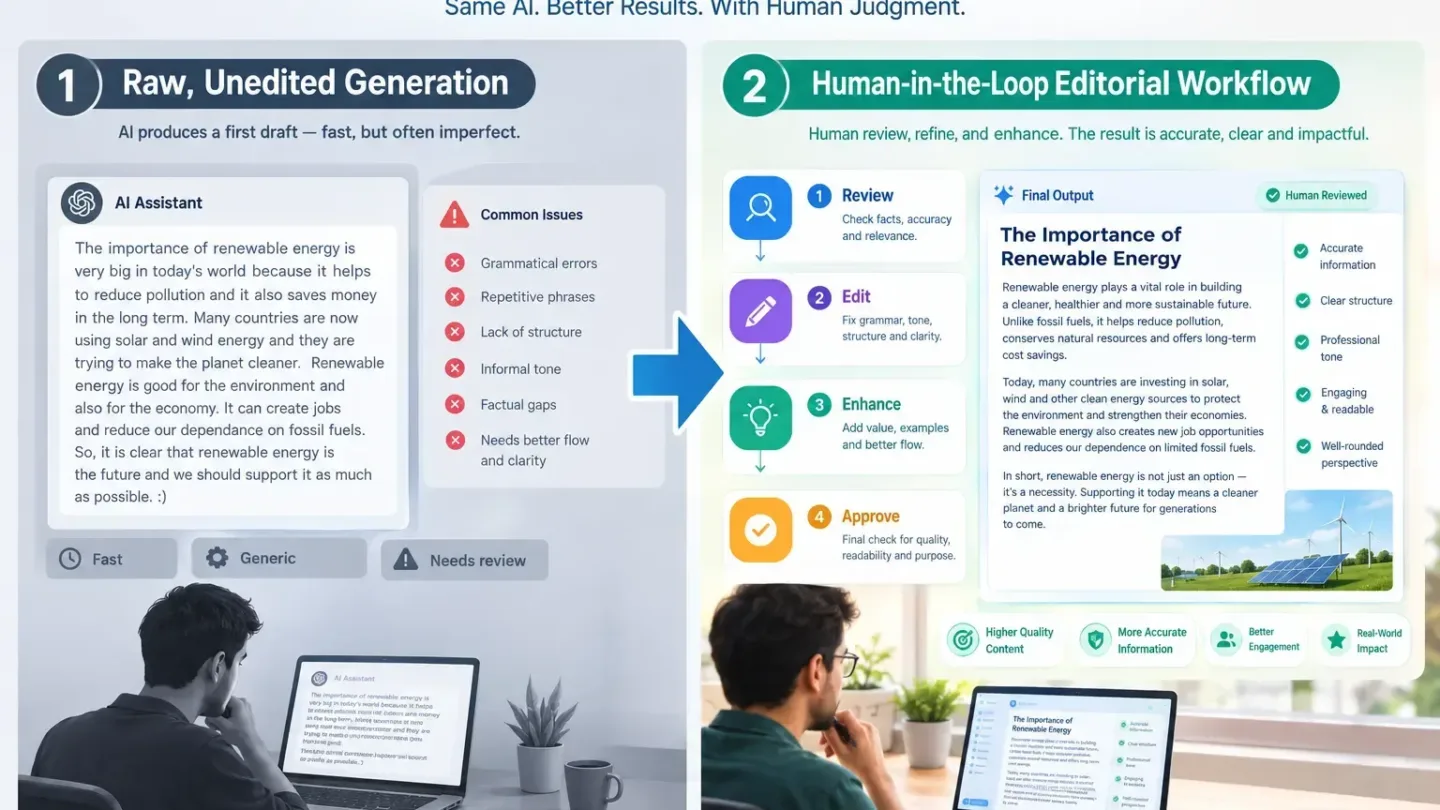
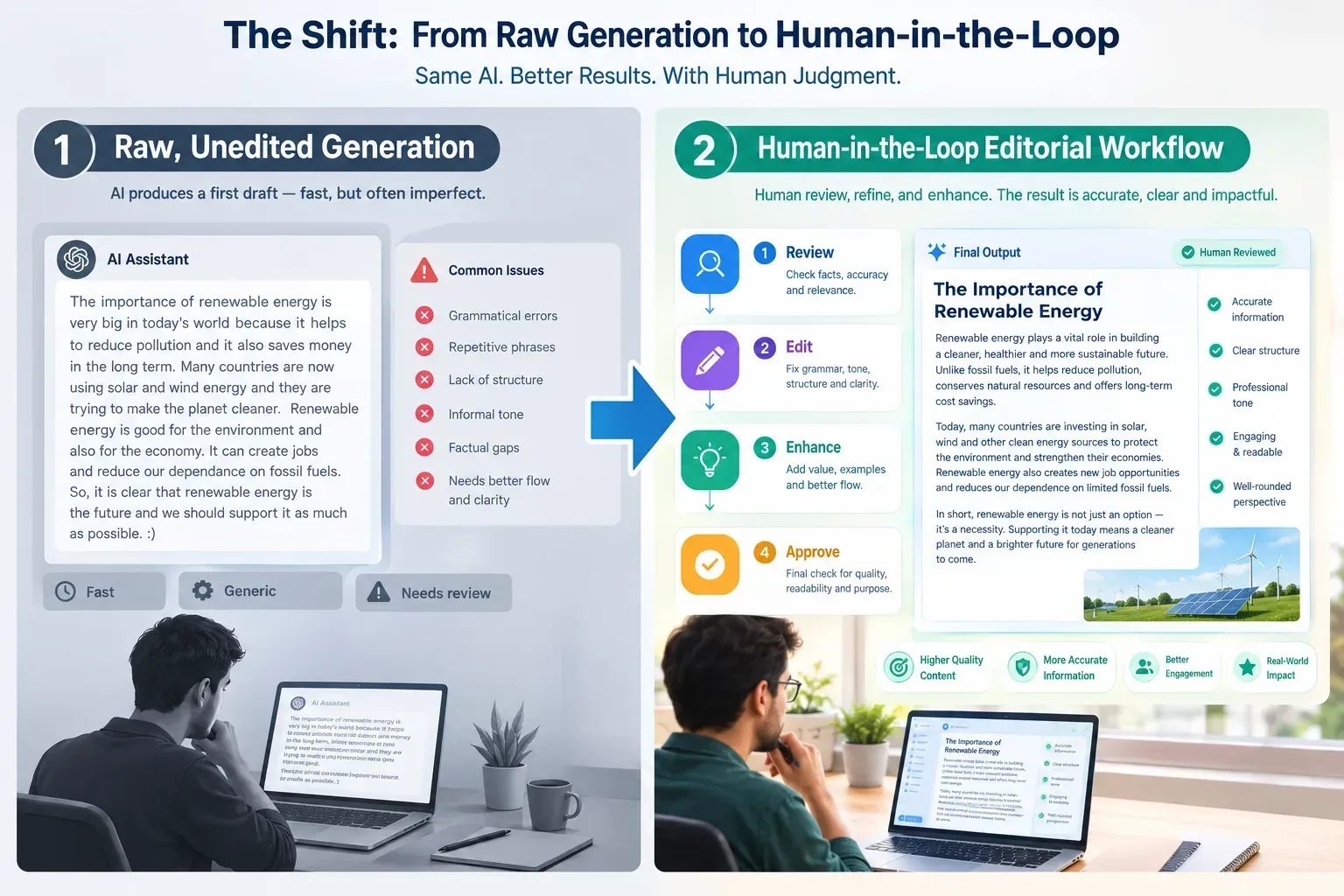
The bottom tier of the market — people who copy-paste a raw prompt into a chat box and deliver the unedited result — is oversaturated and dying out. Clients no longer pay for someone to click a button, because they already have free access to the exact same software.
There’s a real, growing demand for a different kind of writer: the human-in-the-loop operator. Businesses need people who can use AI to speed up drafting and outlining, but who also have the editorial eye to make sure the final piece reads well and holds up factually. You’re essentially getting paid to be a developmental editor and fact-checker for a fast but flawed assistant. Treat AI as a lever that multiplies your output, not a replacement for your judgment, and there’s still strong, steady client demand for writers who can do this well. For a wider view of AI-driven income options, see our broader guide to making money with AI in 2026.
What “AI Writing” Actually Means (and Why the Distinction Matters)
To get paid in this space, you need to understand exactly what you’re selling. Clients are wary of robotic, inaccurate content that could damage their brand or hurt their search rankings. The single biggest reason beginners fail is not understanding the line between acceptable automation and unacceptable spam.
AI-Assisted Writing vs. AI-Generated-Only Writing
There’s a stark difference between work that sells easily and work that gets your freelance accounts suspended.
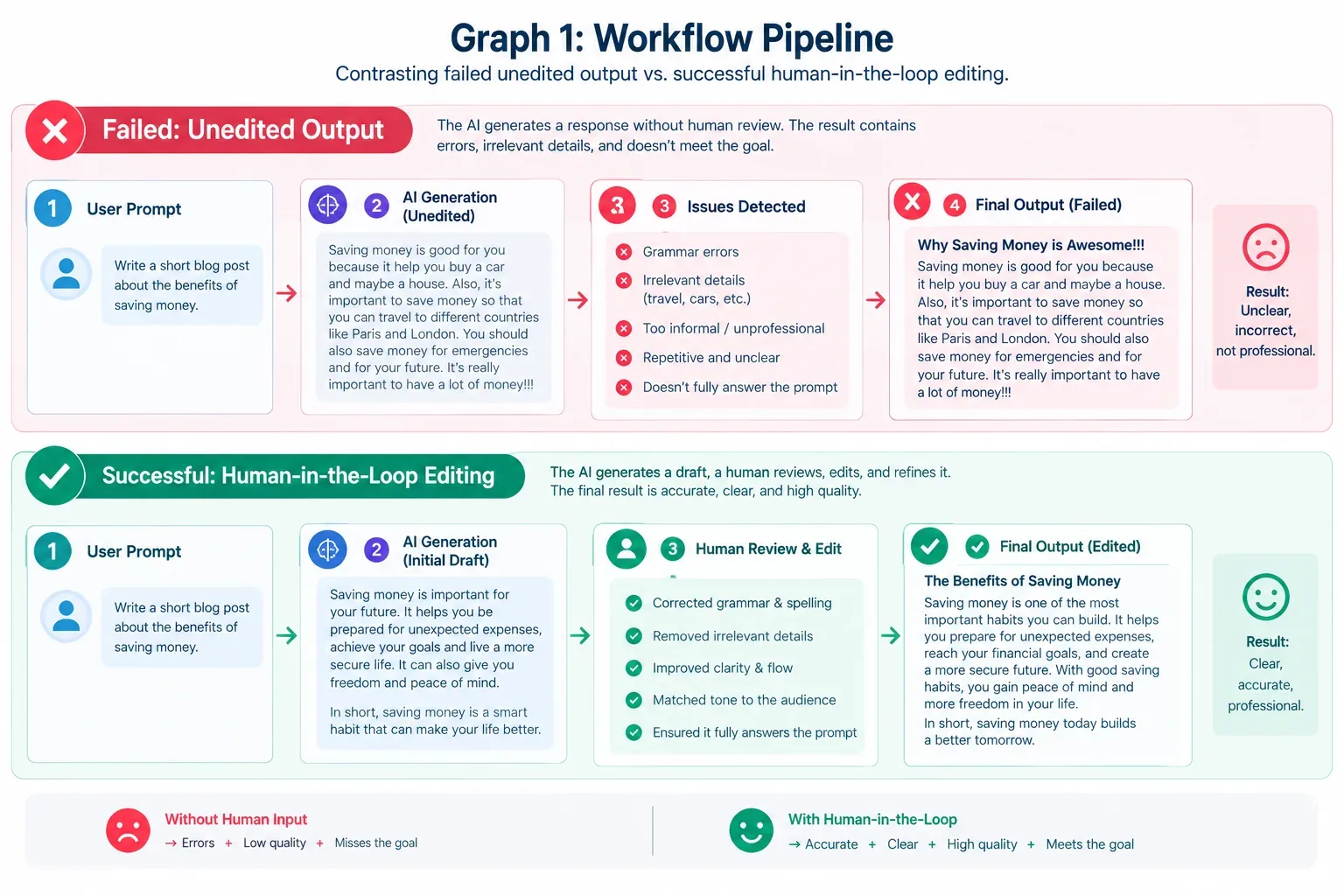
AI-generated-only writing is raw, unedited computational output. You type a generic prompt like “write a 1,000-word article about personal finance,” wait a few seconds, copy the result, and hand it over. This produces repetitive sentence structures, occasionally invented statistics, odd formatting, and no brand personality. Clients run this through detection software, reject it, demand refunds, and leave poor reviews — you can’t build a sustainable business this way.
AI-assisted writing is a collaborative workflow where you stay the creative director. You might use an AI model to brainstorm angles for a blog post, feed it a messy transcript to generate a structured outline, or let it write a rough first draft. Then you do the real work: rewriting the introduction, swapping generic adjectives for punchy verbs, verifying claims, and matching the tone to the client’s audience.
This distinction is the single biggest factor in your success. Clients reject raw computational output, but they’ll pay well for a thoughtful, human-edited piece that you produced quickly using AI as your backend assistant.
How Much Can You Realistically Earn?
AI writing spans everything from quick Fiverr gigs to full-time corporate roles, so the pay scale is wide. Here’s a look at current market benchmarks, with sources, so you know roughly what your time is worth.
| Pay Structure | Figure | Source |
|---|---|---|
| Average US “AI copywriting” hourly pay | $36.74 per hour | ZipRecruiter |
| Hourly range on that page | $14.66–$67.31 per hour | ZipRecruiter |
| Most annual salaries (25th–75th percentile) | $58,000–$86,500 | ZipRecruiter |
These figures come from ZipRecruiter’s salary page for “AI copywriting” jobs. It is a third-party estimate that changes over time, so treat it as directional, not a promise.
Freelance / Per-Project Rates
If you go freelance, you’ll likely price per word or per project, which translates into an effective hourly rate based on how fast you work. There is no reliable public rate card for freelance AI writers, so set your rate by the job, your niche and how fast you work. The advantage of AI writing is speed: a well-researched 1,500-word post that once took five hours might now take one hour of AI drafting plus one hour of heavy editing. As a simple example (not a market rate), a flat $150 for that article would work out to $75 an hour.
Salaried or Contract AI Copywriting Roles
If freelancing feels too volatile, many companies now hire dedicated people to manage their internal AI content pipelines. ZipRecruiter’s page for “AI copywriting” jobs says most salaries fall between $58,000 and $86,500 a year, with an average of $36.74 an hour. These roles typically offer more stability, benefits, and enterprise-level AI tools paid for by the employer. Day to day, the work usually involves enforcing brand guidelines, editing high volumes of text, and building prompt libraries for the marketing team.
What About Income Over Time?
Nobody can give you an honest month-by-month income curve for this work, because results depend on your niche, how many hours you put in and how well you find clients. Expect your first weeks to be about samples and a few low-priced jobs. Raise your rates once you have reviews, and track what you actually earn instead of trusting anyone’s promised numbers.
5 Ways to Make Money With AI Writing (No Experience Needed)
You can’t just announce “I write with AI” and expect clients to line up. You need to package your skills into a specific service that solves a business problem. Here are five of the most workable options to start pursuing today.
1. Freelance Blog and Content Writing
Every business needs a blog to rank on Google, educate customers, and drive traffic. You can pitch yourself as an SEO content writer: use keyword research tools to find what people search for, prompt an AI to generate a structural outline, and have it draft the initial sections. Your real job is editing aggressively so it flows naturally, includes helpful internal links, and gives readers genuine value. Because you work faster than a traditional writer, you can take on more volume.
2. AI-Assisted Copywriting (Ads, Emails, Product Descriptions)
E-commerce stores and marketing agencies burn through copy constantly — product descriptions, catalog updates, daily email newsletters. This kind of writing is formulaic, which makes it a strong match for generative tools. You can specialize in prompting AI for several ad variations, picking the strongest two, refining the hooks, and delivering polished assets. For example, a small skincare brand might pay you to turn one product brief into five ad variations and two email subject-line tests in an afternoon.
3. Ghostwriting and Repurposing Content
Founders, executives, and podcasters often have real insight but no time to write. You can offer a content-repurposing service: the client sends a messy voice memo or rough transcript, you feed it to an AI to extract the key points and structure, and you shape the result into a LinkedIn thread or a polished article. This tends to pay well because the ideas are the client’s own — you’re using the technology to package their expertise for a new platform.
4. Selling AI-Assisted Content Packages or Templates
Instead of hunting for individual gigs, sell a finished asset. For example, pitch a local dentist or real estate agent a “30 days of social media” package: use AI to generate a month of local market tips, format the text into simple Canva templates, and sell the bundle for a flat fee. The client gets a done-for-you solution, and your tools let you finish the month’s workload in a few hours rather than a few days.
5. In-House or Contract AI Content Writing Roles
If freelancing isn’t appealing, look for corporate roles. Agencies, startups, and media companies are hiring for titles like “AI Content Specialist” or “AI Prompt Writer.” In these roles, you act as the editorial gatekeeper: managing the company’s AI subscriptions, feeding them proprietary data, and polishing outgoing content so it stays accurate and consistent across departments. Some writers who go deep on this path eventually move toward building an AI automation agency to scale further.
The Tools You Actually Need to Get Started (Free + Paid)
A common misconception keeping beginners stuck is believing they need expensive software to compete. In practice, the barrier to entry is close to zero if you know where to look.
Free-Tier Tools to Use Immediately
- ChatGPT (OpenAI): the most accessible starting point. The free tier can brainstorm, outline, and draft effectively, and it’s a good place to learn prompt basics without spending anything.
- Claude (Anthropic): many writers favor Claude for long-form work because it tends to produce a more natural tone and handles long documents well, which can mean less heavy editing afterward. (If tool comparisons matter to your workflow, test both — model strengths shift often, so what’s true today may change.)
- Grammarly: the free browser extension is close to mandatory for anyone writing online. It catches passive voice, awkward phrasing, and robotic tone shifts — a useful first line of editorial defense.
Paid Options for When You’re Ready to Scale
- ChatGPT Plus or Claude Pro: roughly in the $20/month range at the time of writing (confirm current pricing, since subscription tiers change). Once your income covers the cost, upgrading gives more reliable access during peak hours and lets you upload larger reference documents, like a client’s brand guideline PDF.
- Copy.ai or Jasper: premium marketing-copy tools with built-in templates and brand-voice memory, generally priced as mid-tier monthly subscriptions — check current pricing directly, as these tools adjust their plans periodically.
Do You Need Experience to Start?
No. You don’t need a journalism degree, agency experience, or a professional network to succeed. The freelance writing market runs on a “show, don’t tell” basis — clients care about the quality of the words in front of them right now, not your credentials.
That said, lacking experience means lacking proof of competence. If you have no writing credits, you need to create the next best thing: speculative work (spec work).
If you want to write B2B software blogs, sit down this weekend and write two or three heavily edited, AI-assisted sample posts. Publish them for free on Medium, Substack, or a simple WordPress site. If you want to write email campaigns, invent a fictional company and draft a complete welcome sequence in a Google Doc. When you pitch a client, don’t apologize for being a beginner — link to your samples and say, “Here’s the exact quality I’ll deliver for your brand.” AI closes your gap in raw drafting speed; your self-made portfolio closes your gap in experience.
The Platform Rules Nobody Tells Beginners About
This is the most overlooked hurdle for new AI writers. You can’t blast raw, automated text across freelance platforms without consequences — platforms have real guidelines, and clients increasingly have detection tools.
Disclosure Policies on Upwork, Fiverr, and Publishing Platforms
According to Upwork’s own AI ethics and transparency guidance, freelancers are expected to always disclose to clients when they use AI-generated content or tools, and human expertise is meant to stay central rather than be replaced outright. Separately, freelancers and agencies widely report that Upwork’s systems flag suspiciously fast, templated, or bot-like proposal patterns — that specific detection mechanism isn’t detailed in Upwork’s own public documentation, but it’s consistent with what the platform says about requiring genuine human review. Other marketplaces and publishing platforms have their own AI rules, so read the current terms of each one before you sell or post anything. Transparency is the safer, more sustainable strategy either way.
AI-Detection Tools Clients Use, and How to Write So It Survives Them
Clients often run submitted drafts through detection tools such as Originality.ai or Winston AI to check they aren’t paying for unedited machine output. A few practical habits help your writing read as genuinely human:
- Cut the transitional filler: AI models default to words like “moreover,” “furthermore,” and “delve.” Cut them — people rarely write this way, and detectors flag it.
- Vary your sentence length: generative models default to uniform, mid-length sentences. Break that pattern manually — follow a longer sentence with a short one.
- Add concrete specifics: AI tends toward broad generalizations. Insert real examples, specific numbers, or a distinct detail a model wouldn’t invent on its own.
Where to Actually Find AI Writing Jobs and Clients
Knowing how to write is only half the job — you need to reach the people holding marketing budgets.
Freelance Marketplaces (Upwork, Fiverr)
These platforms are crowded, but they’re still the fastest route to your first dollar. Position yourself as an “AI-Enhanced Content Editor” rather than hiding your workflow. Frame it as an advantage: “I use AI tools for rapid research and outlining, which lets me spend most of my time editing and perfecting your brand voice — so you get a higher-quality product in less time.” Search for job posts using terms like “AI prompt engineer,” “ChatGPT editor,” or “AI copywriter.”
Job Boards (ZipRecruiter, Indeed, LinkedIn Jobs)
If you’d rather have a stable W-2 role or a long-term contract, traditional job boards work — but searching just “AI writing jobs” floods you with unrelated engineering roles or low-paying data-annotation gigs. Search for the specific titles companies actually use for these hybrid roles:
- AI Copywriter
- AI Content Editor
- AI Content Specialist
- Prompt Writer (Marketing)
When applying, highlight your ability to manage high-volume content pipelines, enforce editorial guidelines over machine-generated drafts, and adapt brand voice consistently.
How to Start This Week (Step-by-Step)
Information without action doesn’t pay the bills. Follow this sequence over the next seven days.
Step 1: Pick a lane. Don’t offer blogs, social posts, and ad copy all at once. Pick one format — like 1,500-word SEO blog posts — to master first.
Step 2: Build two AI-assisted samples. Pick a profitable niche (B2B software, personal finance, healthcare). Draft two detailed pieces with AI, then spend real time manually editing until the robotic patterns are gone.
Step 3: Set up one profile. Choose Upwork or Fiverr. Build a clean profile highlighting your editorial skill and your transparent AI workflow, and link your two samples.
Step 4: Apply and pitch daily. Send several targeted, individually written proposals each day. Read the client’s job post closely and address their specific problem in your first sentence.
Step 5: Price honestly at first. For your first few jobs, accept a lower rate to build a track record of good reviews. Once you have social proof, raise your rates to reflect your actual speed and quality.
Getting Paid: Taxes to Plan For
If you freelance in the US, you are self-employed for tax purposes. The IRS says the self-employment tax rate is 15.3% (12.4% Social Security plus 2.9% Medicare), and you generally have to file if your net self-employment earnings are $400 or more. Set aside part of every payment, keep records of income and expenses, and ask a tax professional about your situation. Rules differ outside the US.
Frequently Asked Questions
Is it cheating or dishonest to use AI for freelance writing? No, provided you’re transparent with your client and deliver a high-quality final product. You’re hired to solve a business problem and deliver polished copy — AI is simply the tool you use to get there faster.
Will clients just use AI themselves instead of hiring me? Some will try, but most business owners quickly realize they lack the time and editorial skill to turn raw AI output into brand-aligned, accurate content. They’re paying you to manage that workflow and provide quality control.
Do I need paid AI tools to start earning money? Not at all. The free tiers of Claude and ChatGPT are capable enough for a beginner to learn prompt engineering, build a portfolio, and land early clients. Once you have templates and workflows built out, you might also look into whether you can genuinely make passive income with AI over the long run. Only upgrade to a paid tier once your income comfortably covers it.
Can I copyright content that I write using AI? In many jurisdictions, purely AI-generated text can’t be copyrighted because it lacks human authorship. If you substantially edit, restructure, and add your own judgment to the draft, your specific final version may qualify for protection — but this varies by country, so check current guidance from your national copyright office if this matters for your work.
How fast can a complete beginner make their first dollar with AI writing? If you dedicate a focused weekend to building two strong portfolio samples and setting up a targeted freelance profile, landing a first paid gig within one to two weeks is a realistic goal if you pitch consistently.
Related reading: how to sell AI prompts.
Getting Started
AI writing isn’t a shortcut to easy money, but it is one of the more realistic ways for a beginner to get paid for writing skills right now — provided you show up as an editor, not just a prompt-typer. Pick one format from this guide, spend this weekend building two genuinely polished samples, and set up one clean profile on Upwork or Fiverr. That’s the entire first step, and it’s the one that actually moves you from reading about this to earning from it.
Was this article useful?
Thanks, that helps us decide what to write next.
Spotted a mistake? Report an error and we will fix it, with a dated correction note.