AI in Personal Finance: The Complete 2026 US Guide
Where AI genuinely helps with budgeting, saving, investing and debt, where it falls short, and how to use it safely.


Imagine asking your finance app, “Can I afford a $2,000 vacation this year without derailing my 401(k) contributions?” Instead of opening three banking apps and building a spreadsheet, the software just answers you.
By 2026, AI in personal finance has moved well past basic chatbots — it’s helping everyday Americans budget, save, invest, and manage debt. The question isn’t whether AI will show up in your financial life. It’s how to use it wisely, without letting it make costly mistakes with your money.
What Is AI in Personal Finance?
AI in personal finance means using machine learning and generative AI to help everyday people manage their money. These tools are built to help you make faster, more informed decisions about your cash flow.
Traditional finance apps follow a fixed script. If your spending crosses a preset $500 limit, the app sends a push notification — with no deeper analysis. Modern AI goes further: it scans for patterns, seasonal shifts, and small discrepancies in your statements.
Instead of just flagging “you spent more this month,” an AI-powered platform explains why. For example, it might tell you: “Your spending increased by 14% this month. This was mostly because your dining-out costs rose, and three yearly subscriptions renewed at the same time.”
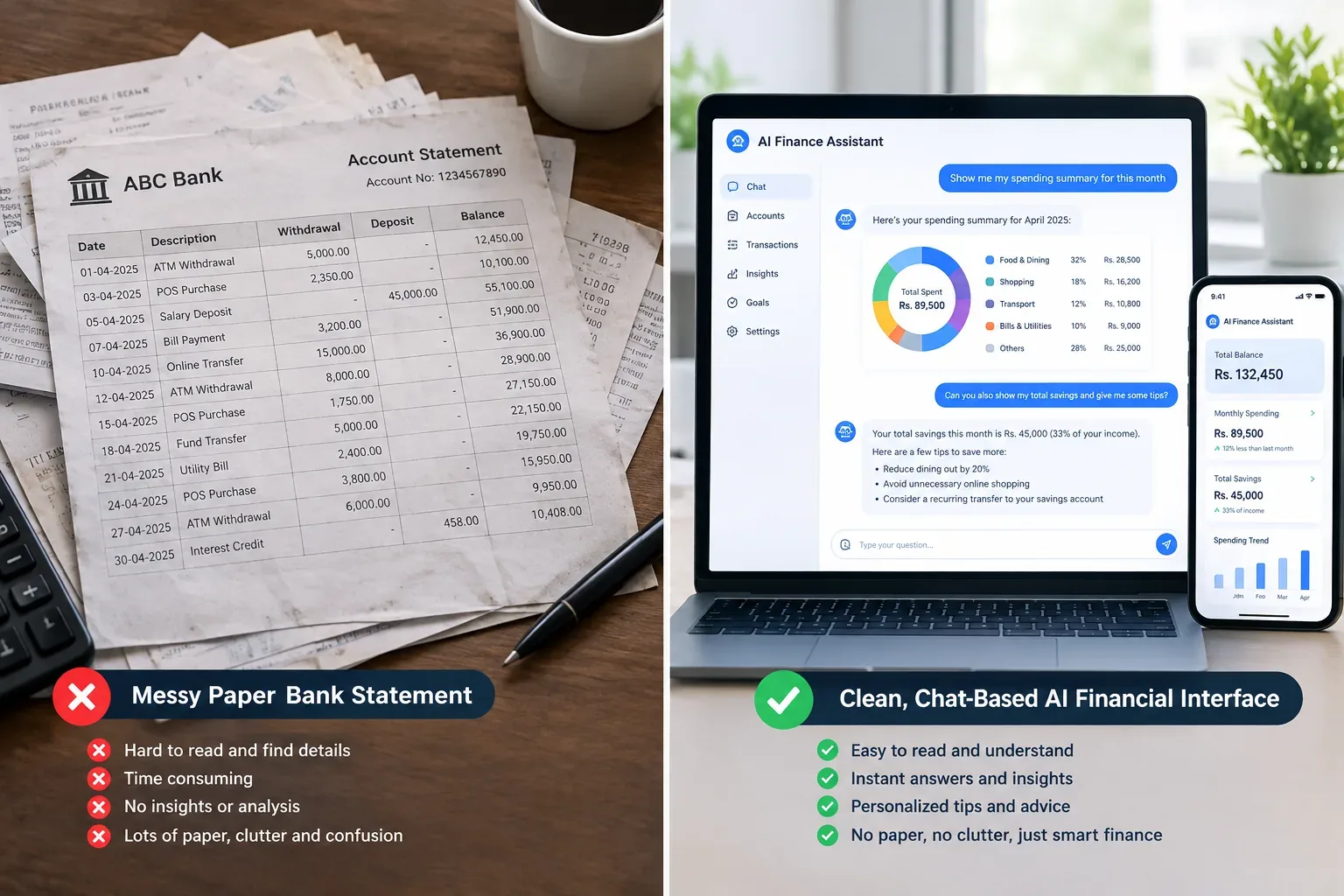
Generative AI adds a conversational layer on top of that. You can ask questions in plain English, like “Where did most of my money go this month?” or “Help me build a budget based on my last three paychecks.”
Table: Traditional Finance Apps vs. AI Finance Tools
| Feature | Traditional Finance App | AI-Powered Finance Tool |
|---|---|---|
| Alerts | Static thresholds (“You spent $100”). | Contextual insights (“Groceries cost 15% more this week”). |
| Budgeting | Manual category assignment. | Automatic, learning-based categorization. |
| Interface | Dashboards, pie charts, raw lists. | Natural language chat, voice commands. |
| Forecasting | Fixed linear projections. | Dynamic “what-if” scenario modeling. |
Why AI Money Management Matters in 2026
AI money management is moving beyond simply watching your checking balance. It’s starting to feel less like an app and more like an actual financial co-pilot.
Older banking apps mostly answer one question: what happened to your money? AI-driven tools push further, asking why it happened and what might happen next.
Adoption is moving fast, even though the data so far is mostly international rather than US-specific. A 2026 study in the Journal of Behavioral and Experimental Finance found that 67.8% of roughly 2,170 South Korean adults surveyed had used an AI chatbot for at least one financial task. A separate EY global survey of more than 18,000 consumers across 23 countries found that 49% had used AI to help with a saving or investing decision in the past six months.
Neither study is specifically about American households, and large-scale US-only figures at this level of detail aren’t available yet. But both point the same direction: people are increasingly turning to AI for real financial decisions, not just casual questions.
That growth comes with a caveat worth repeating. A digital tool is not the same thing as financial wisdom — it can highlight blind spots, but a person still needs to double-check anything that affects a major financial decision.
This shows up in small, everyday moments. Ask your phone, “Why do I always seem to have less money by the end of the month?” and an AI budgeting tool can dig into your transaction history and point to the specific habits pulling cash away from your goals — three forgotten streaming subscriptions, say, or a jump in weekend takeout orders.
How AI Budgeting Tools Are Reshaping Daily Cash Flow
Budgeting is one of the most practical, immediate uses for AI. Old-school budgeting is tedious — typing in daily expenses, picking categories by hand, and checking your progress weeks later.
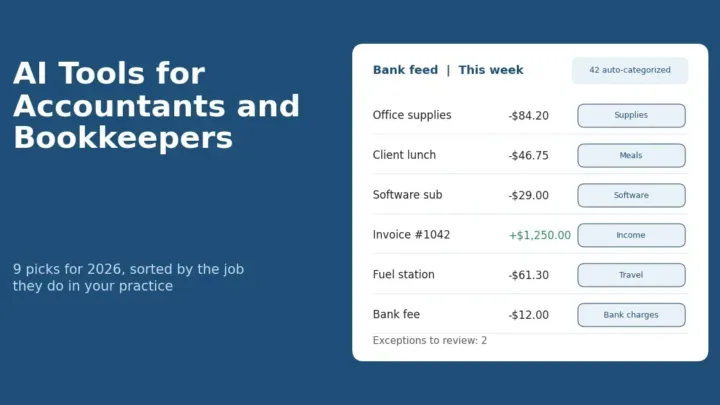
AI budgeting tools handle most of that friction automatically. They categorize expenses, spot spending trends, monitor recurring payments, and match your real-time spending to your stated goals.
Instead of a flat note like “you spent $600 on food,” AI goes deeper. It might explain that your food spending rose 20%, mostly from extra weekend takeout.
Personalized budgeting matters because every life stage looks different. A college student with federal loans and a retiree living on Social Security need very different budget structures — and a good AI tool adjusts its guidance for each.
AI Financial Planning: From Fixed Targets to Shifting Roadmaps
While budgeting steers your cash today, AI financial planning looks further ahead — at questions about long-term stability and retirement.
It helps you figure out how much to safely set aside, whether you can afford a down payment next year, and when you’ll realistically hit a savings goal based on your actual spending habits, rather than a generic rule of thumb.
Consider a simple example: you want to save $12,000 for a car in two years.
Instead of the simple math of saving exactly $500 a month, an AI tool can model several realistic paths side by side. One path might save $300 a month in the winter and $700 in the summer, to match seasonal or commission-based income. Another might cut a few recurring expenses to save $650 a month and finish sooner.
Table: Dynamic AI Financial Planning Scenarios
| Scenario Goal: Save $12k | Strategy Modeled by AI | Estimated Completion | Lifestyle Impact |
|---|---|---|---|
| Path A: Linear | Save exactly $500 every month. | 24 months | High discipline required. |
| Path B: Seasonal | Save $300 in winter, $700 in summer. | 24 months | Matches seasonal or commission-based income. |
| Path C: Aggressive | Cut streaming and dining out, save $650/mo. | ~19 months | Faster result, less lifestyle flexibility. |
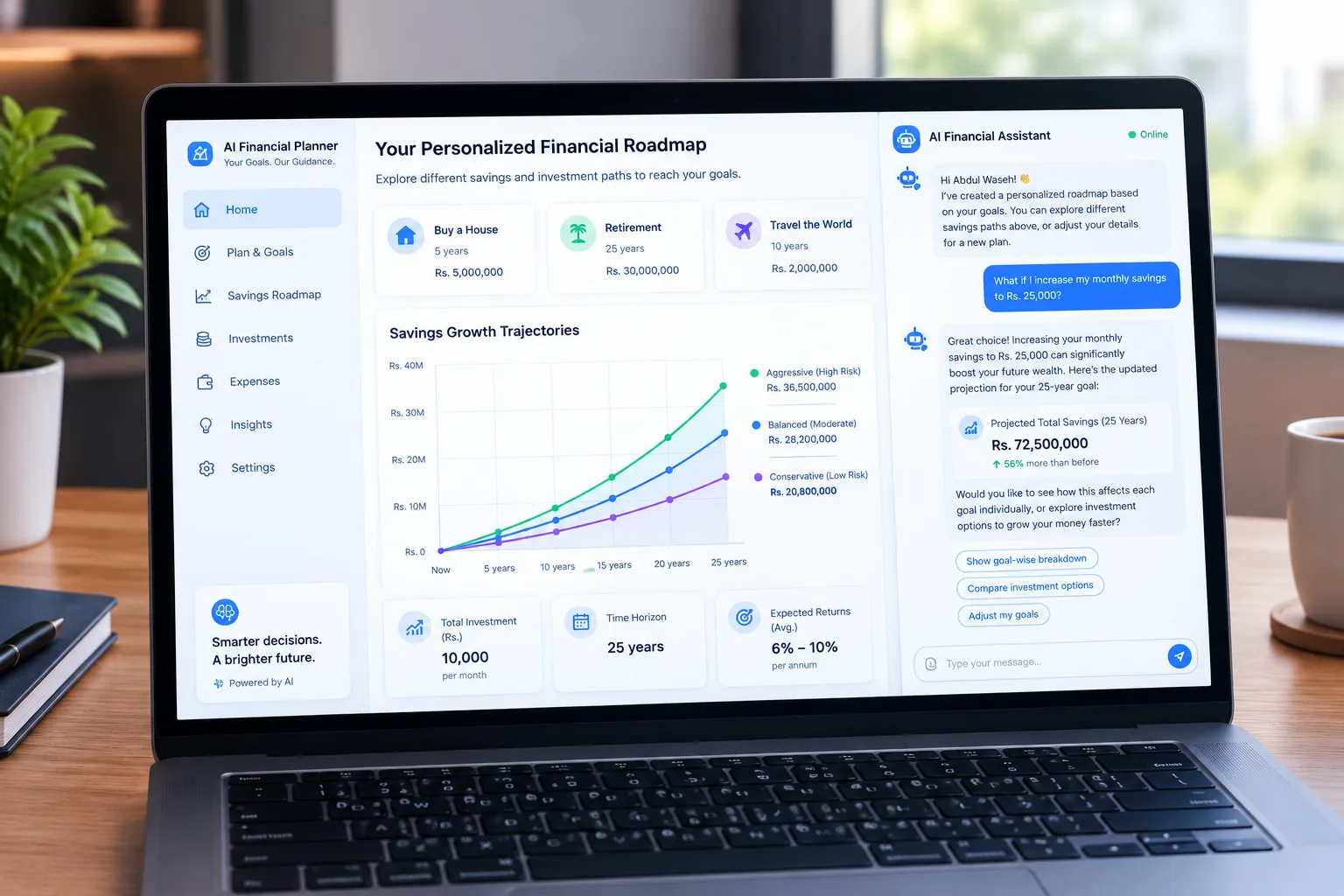
Personal Finance Automation: Letting Tech Handle the Repetitive Work
Personal finance automation lets technology handle the repetitive parts of daily money management — moving idle cash into high-yield savings, paying recurring bills, and categorizing expenses.
When AI is layered into that automation, the system gets more adaptive. It notices shifting patterns instead of applying the same fixed rule every month.
For instance, a standard bank rule might transfer $100 to savings on the 1st of every month, no matter what. An AI-driven version notices you had an unexpected medical bill and pauses the transfer to avoid an overdraft fee.
It can also flag trends before they become a problem. Being told “your electricity bill has risen 15% for three months in a row” is a lot more useful than a routine payment confirmation.
None of this means giving up control. Good financial automation still needs guardrails — you should always know what the system can access, and which decisions still require your approval.
AI Financial Assistant: Your New Financial Copilot
An AI financial assistant may be one of the more useful consumer developments in personal finance this decade. A traditional finance app hands you raw numbers and stops there; an assistant helps you interpret them.
Ask “What changed in my finances this month?” and it can break down your income, spending, and debt progress in seconds — then follow up with “What should I focus on next week?” for a short, actionable plan tied to your actual due dates.
For example, a connected assistant might respond: “Your income was steady, but spending rose 9% due to a new phone plan and higher grocery bills. You’re on pace for your emergency fund, but about $200 behind on your vacation goal.” That kind of specific, plain-English answer is the real difference between a dashboard and an assistant.
In 2026, the strongest versions of this work directly with your connected, real-time data rather than answering generic questions. When your data is that deeply connected, confirming the platform’s actual security practices — not just a “bank-level encryption” tagline — matters more than ever.
AI for Investing and Wealth Management
AI can help everyday investors work through dense investment vocabulary — explaining terms like “asset diversification” or a “yield curve” (a chart showing bond interest rates across different time periods) in plain language.
It can help you compare broad categories, like ETFs versus mutual funds, and surface useful questions to research before you open a brokerage account.
For instance, ask an AI tool to compare a total-market index fund against a handful of individual growth stocks, and it can lay out the difference in diversification and historical volatility side by side. What it can’t do is tell you which one will perform better going forward.
If you’re relying on technology to manage market assets, it helps to understand how robo-advisors use AI to automatically rebalance a portfolio and harvest tax losses.
One rule matters above all else here: AI cannot guarantee investment returns. It processes historical data and past patterns, but markets are driven by unpredictable future events — no model knows what the economy will do tomorrow. AI should support your research, not serve as a prediction to follow blindly.
AI for Debt Management
Debt gets complicated fast with multiple loans, overlapping credit cards, fluctuating rates, and different due dates.
AI can organize that chaos. It reads your loan terms and compares repayment strategies using your actual balances in real time.
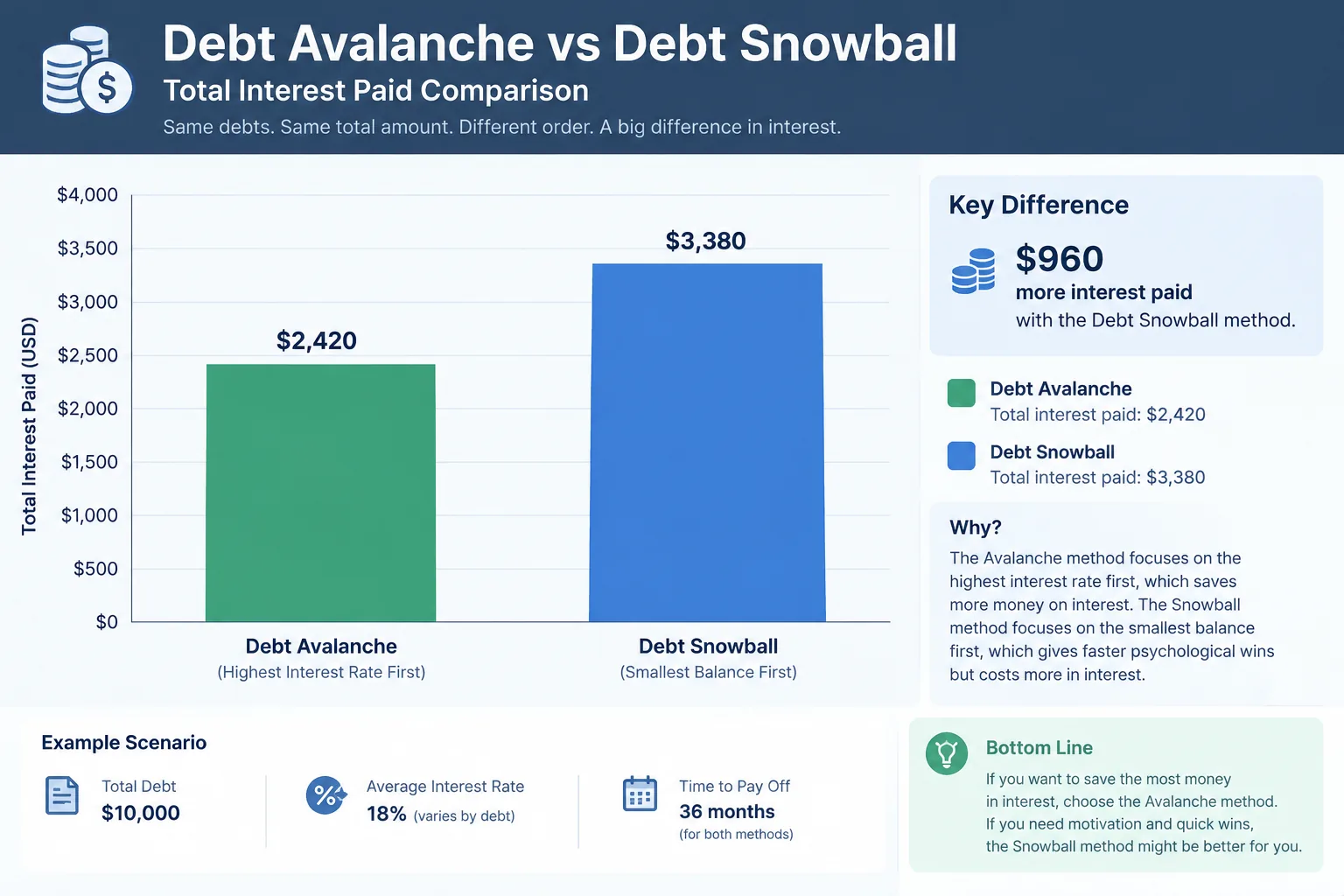
It can calculate the timeline for the debt avalanche method (paying off the highest-interest debt first, to minimize total interest paid) against the debt snowball method (paying off the smallest balance first, to build momentum).
Table: AI Debt Repayment Strategy Comparison
| Strategy | AI Calculation Focus | Primary Benefit | Best User Profile |
|---|---|---|---|
| Debt Avalanche | Sorts by highest APR (annual percentage rate). | Saves the most total money. | Mathematically driven users. |
| Debt Snowball | Sorts by lowest total balance. | Quickest individual payoffs. | Users needing early psychological wins. |
Weighing both strategies against your real numbers, AI can show roughly when you’d become debt-free under either path.
Even so, always double-check your actual interest rates, hidden fees, and prepayment penalties yourself — AI can misread a complex PDF statement.
AI and Financial Security
AI has real potential to protect your money, but it introduces new risks at the same time.
Major US financial institutions already run AI systems in the background to flag suspicious transactions and block fraud within milliseconds — for example, freezing a $900 charge made at 3 a.m. in a country you’ve never visited.
The 2026 EY survey cited earlier found that half of consumers believe AI will help detect and prevent financial fraud. Unfortunately, criminals are using the same technology.
Deepfake voices are used to impersonate family members in distress. AI generates convincing phishing emails, fake investment portals, and sophisticated text-message scams.
The line between what’s real and what’s manufactured is blurring. Modern financial literacy now needs to include security awareness, not just budgeting skills — knowing how to verify a request is as important as knowing how to make one.
The Risks of AI in Personal Finance
AI is powerful, but it isn’t flawless. Leaning on it too heavily introduces its own hazards.
First, generative AI can hallucinate — it can state financial information confidently that’s mathematically or legally wrong. For example, it might quote an outdated contribution limit or tax bracket as if it were current for this year; always verify anything that affects a real decision against the IRS or your bank’s own site.
Privacy is another concern. Financial data is some of the most sensitive information you have. Per the CFPB’s own research on financial chatbots, understand exactly what data a service collects and stores before you connect a bank account.
AI can also be biased or inconsistent — its output can shift based on the details you provide and how you phrase a question.
Finally, AI doesn’t understand your full life context. Financial decisions are tied to things a model can’t quantify: aging parents, career plans, and how much risk you can actually stomach emotionally.
How to Use AI in Personal Finance Safely
If you’re new to this, start with low-risk, easily verifiable tasks: basic budgeting, historical expense analysis, general financial education, and scenario planning.
Never share banking passwords, routing numbers, or PINs with a generative AI chat tool, even if the request seems harmless.
Always verify anything important. Double-check interest rates, current tax rules, fees, and loan terms on official IRS or bank websites, rather than trusting an AI’s confident summary at face value.
When AI gives you a recommendation, ask it to explain its reasoning — a prompt as simple as “Why exactly did you suggest this budget cut?” often reveals whether the advice actually fits your situation.
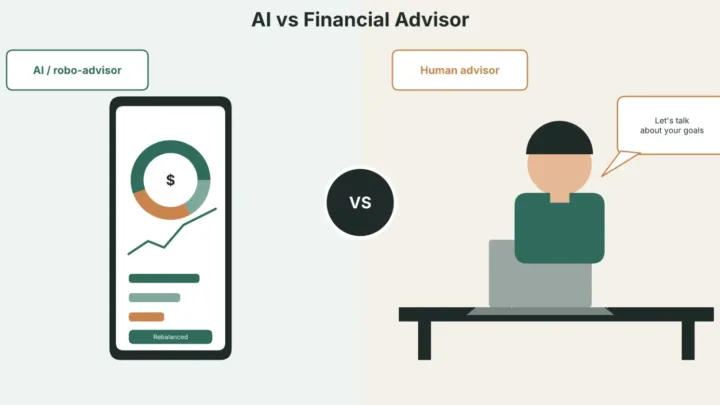
Keep strict human control over major investments, tax filings, and estate decisions. If you’re weighing a big move, it helps to understand the difference between relying on AI versus a financial advisor before you decide — and either way, a qualified human should sign off on life-altering choices.
What’s New in AI Personal Finance for 2026
The landscape has shifted fast in just the last couple of years. AI-powered financial assistants are far more conversational now, and more tailored to the individual user.
Because connected accounts let these tools work from real, live data, the advice feels more actionable — you’re not reading a generic blog post, you’re getting an answer based on your actual account balance.
AI agents are also starting to move past just answering questions. Some are beginning to coordinate multi-step actions, like negotiating a lower cable bill or flagging a hidden fee for you to dispute.
Personalized scenario planning is becoming a standard feature too — asking “What happens to my retirement timeline if my household income drops 20% next year?” is no longer a novelty.
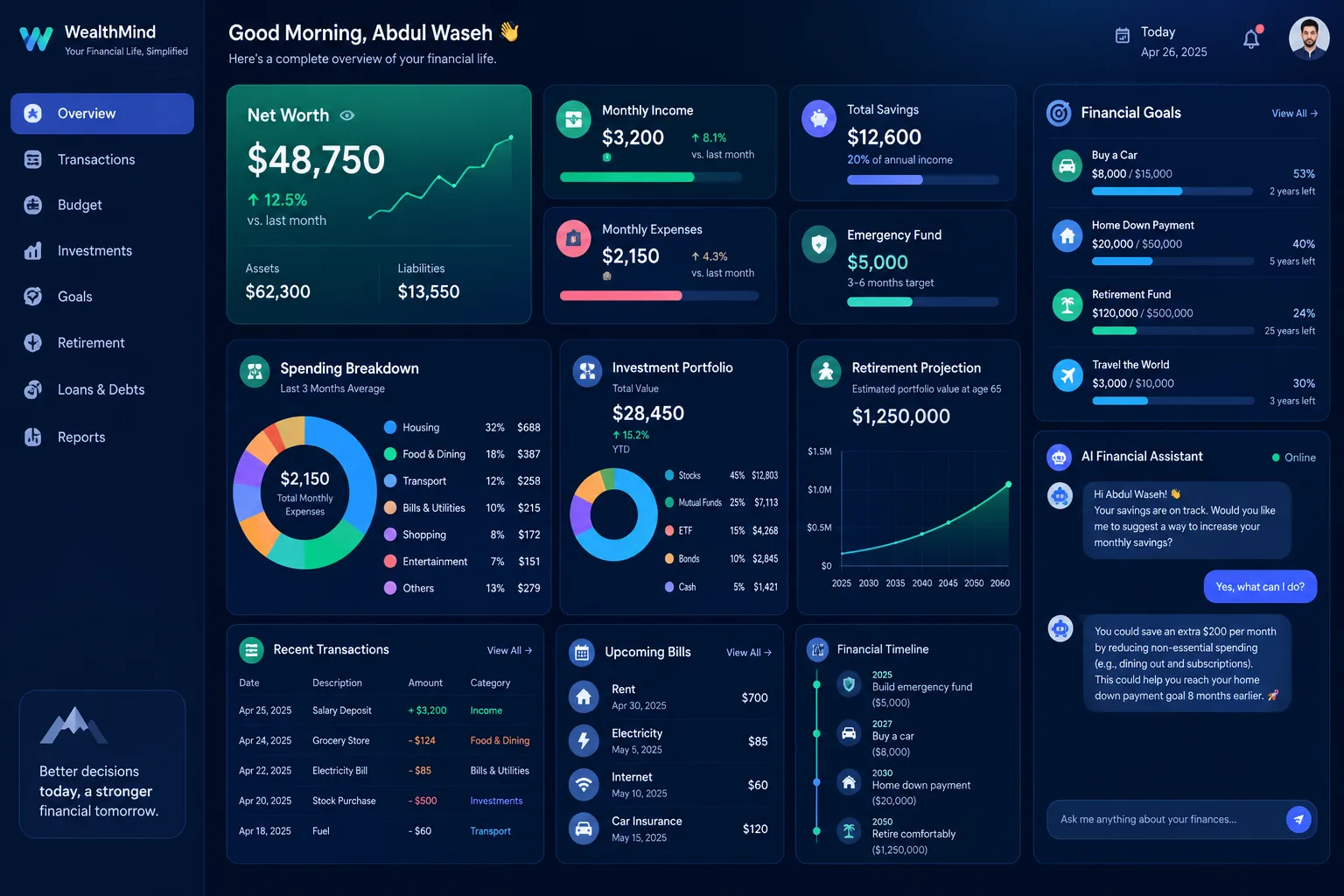
Put together, the near future likely blends budgeting, planning, automated bill pay, and a conversational assistant into one ongoing experience. Picture an AI dashboard that greets you each morning with something like:
- Spending: Safely within target
- Savings: On pace for your yearly goal
- Upcoming bills: 3 due this week
- Unusual transactions: 1 flagged for review
- Debt progress: Improving steadily
Instead of logging into four different apps, you’d simply ask, “What needs my attention today?” and get a plain-English answer.
Table: AI Personal Finance — What It Should and Shouldn’t Do
| AI Excels At… (Low Risk) | Human Verification Needed For… (High Risk) |
|---|---|
| Categorizing daily budgeting | Executing major financial decisions |
| Historical expense analysis | Filing complex tax returns |
| Explaining financial education topics | Committing to investment decisions |
| Mapping out savings scenarios | Navigating legal estate matters |
| Visualizing debt comparisons | Approving high-risk, large transactions |
The relationship that’s forming isn’t Human vs. AI. It’s Human + AI — the technology handles the grinding complexity, and you keep the final “approve” click on anything that matters.
FAQ
Can AI manage my finances for me?
AI cannot manage your finances completely on its own, nor should it. It excels at tracking expenses, categorizing data, identifying trends, and modeling scenarios. However, it requires a human to set the overarching goals, verify the data, and make the final decisions on where the money actually moves.
Is it safe to connect my checking account to AI tools?
It is generally safe if you use reputable, established financial platforms with strong security practices. Always read the privacy policy to check whether the company sells your transaction data to third-party marketers or uses it to train public AI models.
Can ChatGPT give financial advice?
No. ChatGPT and similar public generative AI models are not fiduciaries or certified financial planners. While they can explain general financial concepts and outline standard budgeting strategies, they should never be relied on for personalized, legally binding financial or tax advice.
What is the best AI personal finance app?
The “best” app depends on your goal. Tools like Monarch Money and Copilot are commonly used for AI-assisted budgeting and expense tracking. If your goal is automated investing and tax-loss harvesting, platforms like Wealthfront or Betterment are widely used instead. Compare current fees and features directly on each provider’s site before choosing, since pricing and tools change over time.
Will AI replace human financial advisors?
AI will not replace human advisors for complex situations. While it can easily handle basic tasks like expense tracking and simple asset allocation, human advisors are still necessary for emotional guidance during market crashes, complex estate planning, business tax structuring, and other decisions that call for personal judgment a model can’t fully replicate.
Conclusion
AI has genuinely changed what a personal finance app can do. It can explain your spending instead of just logging it, model realistic savings paths instead of one flat number, and flag fraud before it clears. None of that requires blind trust — these tools work best when you treat them as a fast, well-informed assistant rather than a decision-maker.
The safest approach is to let AI handle the repetitive analysis while you keep control of anything with real consequences: a big investment, a tax filing, an estate decision.
If you haven’t tried one yet, start small: connect a single account to one reputable AI budgeting app this week, and see how its insights compare to what you already know about your own spending before you hand it any more responsibility.
Related Reading
- AI in Personal Finance: Best Tools & Strategies for 2026: the tools worth trying, compared.
- Can AI Manage Your Money? What It Can and Can’t Do: what AI can and can’t safely handle for you.
- How to Use ChatGPT for Budgeting (Step-by-Step + Prompts): a step-by-step budgeting workflow with prompts.
- How to Use AI to Save Money: 9 Practical Ways (2026): nine practical ways to cut spending.
- How to Use AI to Pay Off Debt Faster (Beginner Guide): build a payoff plan with an avalanche or snowball method.
- How to Use AI to Improve Your Credit Score (2026): spot report errors and draft disputes.
- AI Investing Apps for Beginners: How They Work (2026): how robo-advisors and AI investing apps work.
- AI Tax Software: Can It Really Do Your Taxes? (2026): what AI tax software does and where it slips.
Editorial note: This guide is for general education and isn’t personalized financial, tax, or legal advice. Talk with a licensed financial advisor, CPA, or tax professional about decisions specific to your situation.
Sources
Pak, T.Y. “How individuals use generative AI for personal financial management.” Journal of Behavioral and Experimental Finance, 2026.
EY. “Nearly half of global consumers now use AI to guide savings and investment decisions.” EY Global Newsroom, April 2026.
Consumer Financial Protection Bureau. “Chatbots in Consumer Finance.”
Was this article useful?
Thanks, that helps us decide what to write next.
Spotted a mistake? Report an error and we will fix it, with a dated correction note.
Disclaimer. This article is general information, not financial, tax, or investment advice. Figures describe specific cases at specific dates. Talk to a licensed professional before acting on anything here. Full disclaimer.