Can AI Manage Your Money? What It Can and Can’t Do
What AI can handle in your finances, what it can't, and how to use it safely.

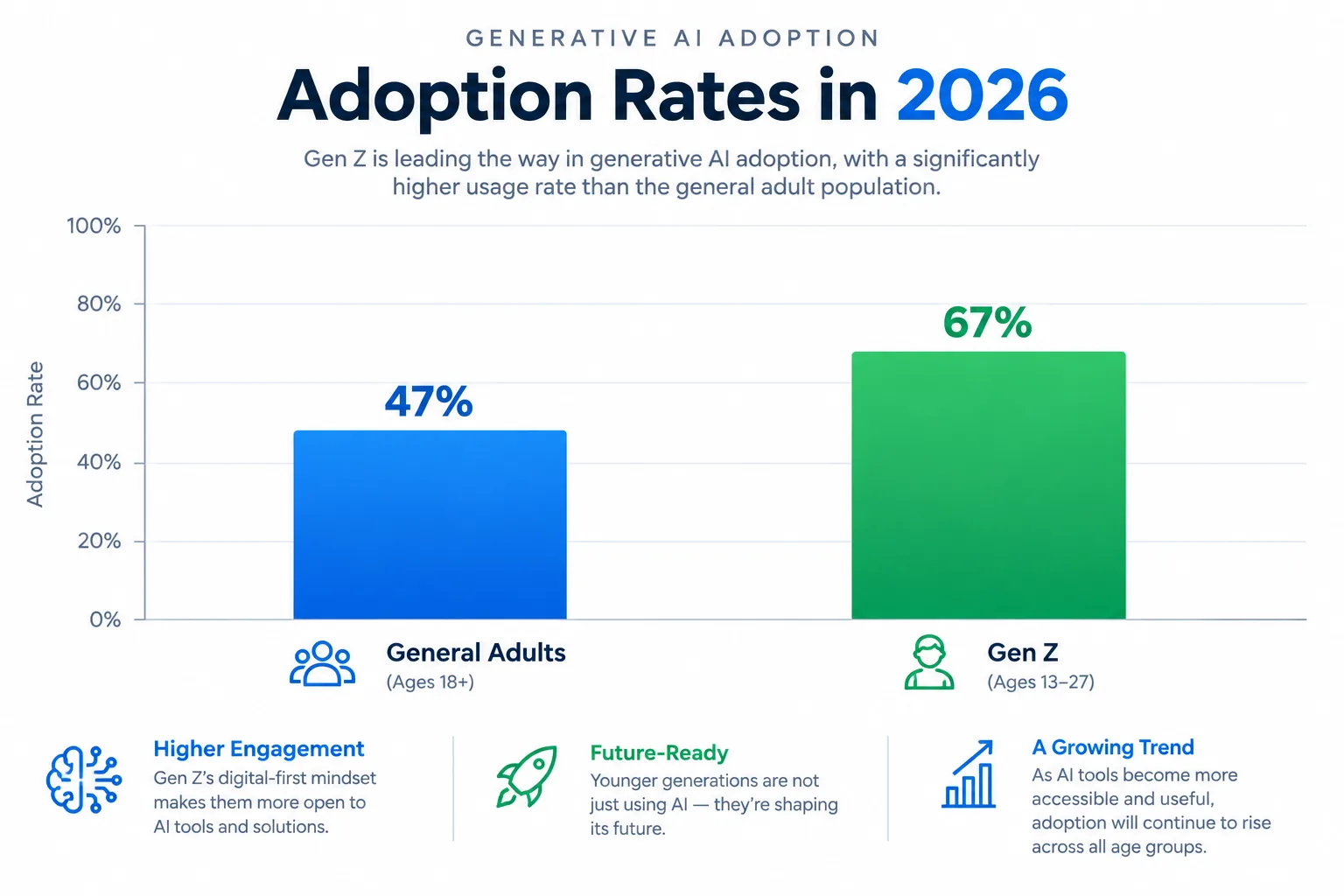
Can AI manage money? Yes, AI can manage a lot of your day-to-day money tasks — but it isn’t a licensed financial advisor, and treating it like one is where people run into trouble. Nearly half of US adults have used or considered using generative AI to help manage their personal finances, and that share jumps to 67% among Gen Z, according to Experian’s 2024 consumer research on generative AI adoption. The same technology that can categorize your spending in seconds can also hallucinate a tax rule that doesn’t exist or misread your intent and cancel the wrong subscription. This guide walks through exactly where AI genuinely helps, where it falls short, and how to use it without putting your money at risk.

What Can AI Do for Personal Finance?
AI is genuinely useful for the repetitive, data-heavy parts of managing money — the tasks that used to mean manually scanning a spreadsheet or a stack of statements. It processes transaction data, spots patterns, and explains concepts faster than doing any of that by hand. Here’s where it earns its keep.
Budgeting and Expense Tracking
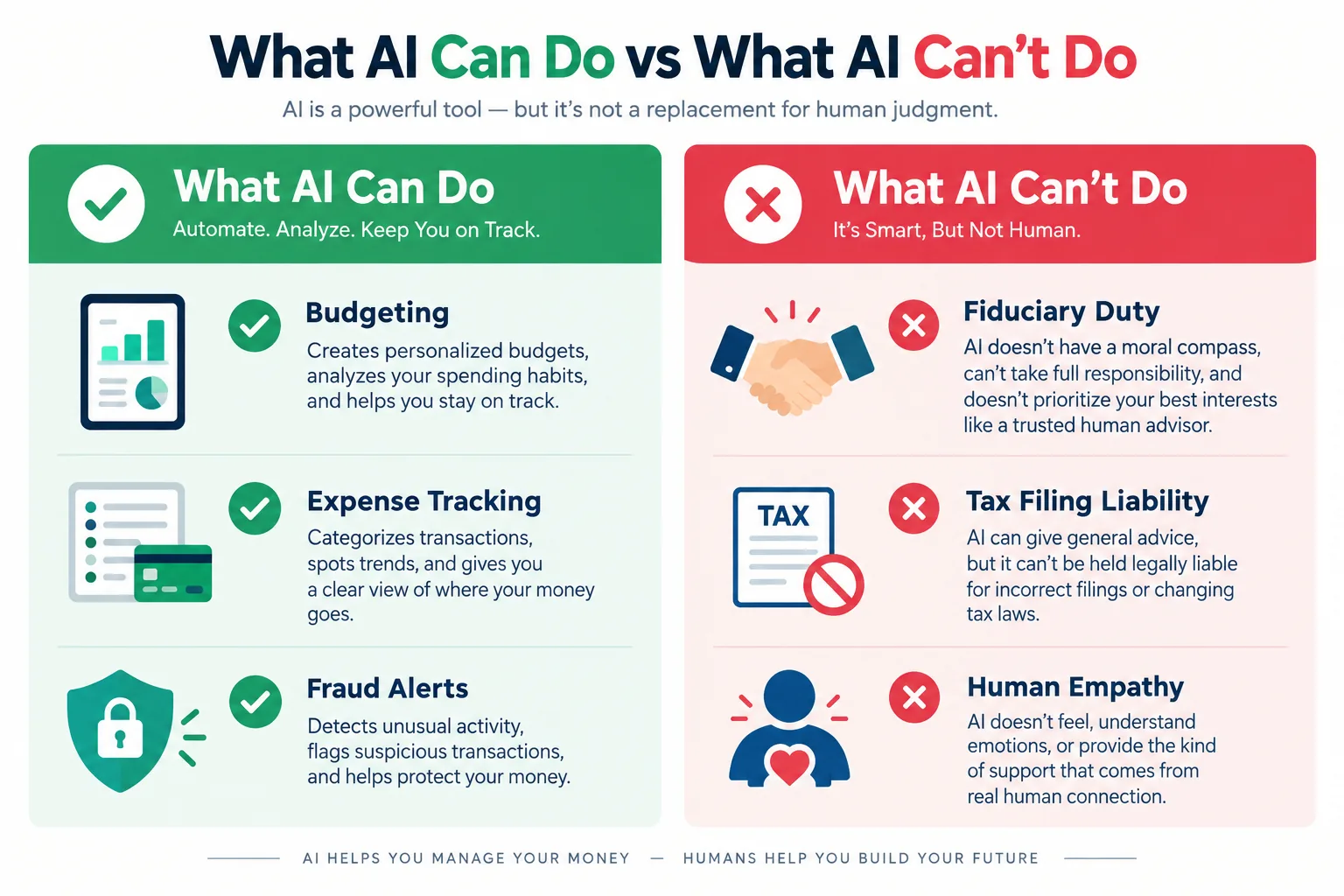
Modern budgeting apps use machine learning to automatically categorize your purchases and flag recurring charges you might have forgotten about. For example, if you link an app to your checking account, it might notice you’re paying for three overlapping streaming subscriptions and surface $45 a month in charges you didn’t realize were still active — the kind of pattern that’s easy to miss scrolling through a statement line by line.
For a closer look at specific apps, see our roundup of the best AI budgeting apps to save money in 2026.
Explaining Financial Terms and Concepts
AI chatbots work well as an on-demand tutor for financial jargon. Ask one to explain a “backdoor Roth IRA,” for instance, and it can walk through the basic mechanics — contributing to a traditional IRA and then converting it to a Roth — in plain language, and adjust the explanation if you tell it you’re a complete beginner versus already familiar with retirement accounts. That’s a real strength: it removes the intimidation factor of finance vocabulary. It’s not a substitute for confirming the specific contribution limits and rules that apply to your situation, which change periodically and are worth checking against a current, official source before acting.
Scenario Modeling and Savings Calculations
AI is handy for quick, illustrative math you’d otherwise need a spreadsheet for. You could ask it to estimate how paying an extra $200 a month toward a $20,000 auto loan at 6% interest might shorten the payoff timeline, and it can walk through the general math step by step. Treat the output as a helpful estimate to sanity-check your thinking, not a guaranteed number — verify the specific figures with your lender or a proper amortization calculator before making a decision based on them.
AI Tax Optimization — What It Can Flag (and What It Can’t File)
Tax software increasingly uses AI to scan your entries and flag deductions you might otherwise miss — for example, noticing unreimbursed home-office expenses and suggesting you look into that deduction category. What it can’t do is represent you before the IRS if you’re audited, or take legal responsibility if it gets a rule wrong. Anything AI flags on a tax return is worth a second look from the software’s own review step or a real preparer before you file.
Fraud Detection and Account Monitoring
Banks already lean heavily on AI to watch real-time spending patterns across millions of accounts. If your card is suddenly used for a purchase in a different country than the one your phone’s location shows, the system can freeze it automatically — often within seconds, well before a human fraud team could review the same case. This is one of the clearest wins for AI in personal finance: it’s fast, tireless pattern-matching, exactly the kind of task computers are built for.
What AI Can’t Do (Yet)
Despite how capable these tools feel in daily use, there are hard limits. Experian’s research found 47% of US adults have used or considered generative AI for their finances, rising to 67% among Gen Z respondents — but widespread use doesn’t mean the technology has closed its real gaps.
Act as a Fiduciary
A fiduciary is legally required to act in your best interest and can be held accountable if they don’t. AI has no license to lose and no legal liability if it steers you wrong — if a chatbot suggests an investment that turns out to carry a conflict of interest baked into its training data, there’s no regulator you can complain to and no malpractice claim you can file.
Handle Nuanced Tax and Legal Situations
Estate planning and business structuring often hinge on details AI tends to miss. For example, inheritance and property rules can differ significantly depending on whether you live in a community-property state or a common-law state, and an AI answer may not account for which one applies to you. A human attorney who knows your state’s specific statutes is worth the cost for anything with real legal consequences.
Understand Your Full Life Context
Algorithms evaluate the numbers you give them, not the life circumstances behind those numbers. A parent deciding whether to pause retirement contributions to cover a child’s medical expenses is weighing far more than a spreadsheet can capture — a good human advisor asks about that context unprompted; an AI chatbot only responds to what you happen to type.
Guarantee Accuracy (Hallucination Risk)
AI language models predict plausible-sounding text, not verified fact. That’s how you end up with a chatbot confidently citing a contribution limit that changed two years ago, or inventing a tax rule that never existed. Always verify any specific number or rule against an official source — the IRS website, your plan administrator, or a licensed professional — before acting on it.
AI Money Management Tools in 2026 — What’s Actually Out There
The current landscape breaks down into a few distinct categories, each with a different level of access to your actual money and a different level of regulation.
Budgeting and Tracking Apps
These apps connect to your accounts through read-only APIs, meaning they can see your balances and transactions to categorize spending and project trends, but they can’t move your money. This is the lowest-risk category on this list, since a bug or a bad recommendation can’t actually touch your funds.
Robo-Advisors
Platforms like Betterment and Wealthfront use algorithms to automate portfolio allocation based on a risk questionnaire you fill out. Unlike a budgeting app, a robo-advisor does hold and trade your money, which is why it’s registered with regulators rather than just being a piece of software. For more on how this works, see our beginner’s guide to how robo-advisors use AI.
General-Purpose Chatbots Used for Finance (ChatGPT, Claude, Gemini)
These large language models are useful for research, explanations, and calculations, but they don’t connect to your live accounts and carry no financial regulation at all. If you ask one to “invest my savings for me,” it can only describe options in the abstract — it has no ability to actually place a trade or hold your funds.
Agentic AI Tools That Can Take Actions on Your Behalf
A newer category of tools can take real actions rather than just suggesting them — for example, an agentic assistant connected to your accounts might notice a forgotten subscription and cancel it automatically. That convenience comes with real risk: giving any bot standing permission to move money or cancel services means a misread instruction could cause an unintended transfer or cancellation, so these tools deserve tighter limits and closer monitoring than a read-only budgeting app.
Can You Use ChatGPT as a Financial Advisor?
No — treating a general-purpose chatbot as your financial advisor is a real risk, even though it can be a genuinely useful research assistant alongside one.
What ChatGPT, Claude, and Perplexity Each Do Differently for Money Questions
- ChatGPT: strong at building spreadsheet formulas and formatting data into clean tables — useful for putting together your own budget template.
- Claude: handles long documents well, so it’s useful for summarizing a dense tax guide or a fund prospectus you’ve uploaded.
- Perplexity: built around live web search with citations, which makes it a reasonable starting point for current market news, though the underlying sources still need checking.
Why General-Purpose Chatbots Aren’t Regulated Financial Advice
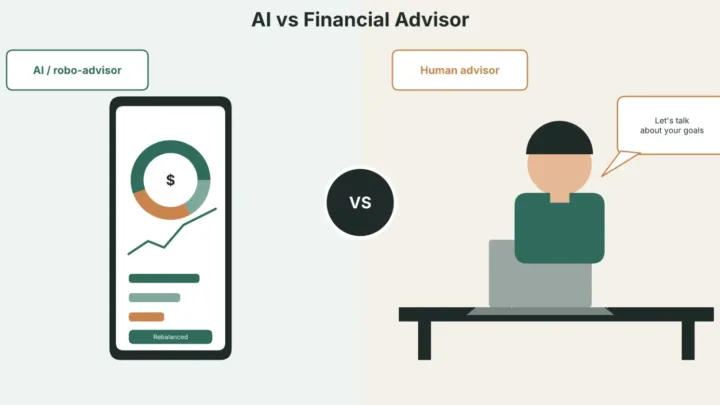
These tools are built by technology companies, not registered as investment advisers with the SEC, and their own terms of service typically tell you not to rely on their output as professional advice. A registered robo-advisor is legally required to act as a fiduciary; a general chatbot answering a money question carries no such obligation.
Robo-Advisor vs. AI: What’s the Difference?
It’s easy to lump these together since both use algorithms, but they’re regulated very differently and do very different jobs.
| Feature | Robo-Advisors | Generative AI Chatbots |
|---|---|---|
| SEC Regulation | Yes — registered investment advisers | No regulation as financial advice |
| Primary Purpose | Portfolio management and rebalancing | Informational search and text analysis |
| Typical Cost | Roughly 0.25%–0.50% annual management fee | Free to about $20/month |
| Account Action | Executes trades automatically | Cannot trade or hold funds |
| Personalization | Quantitative risk-score algorithm | Conversational, prompt-dependent |
Fee and cost figures are general industry ranges, not a quote from any specific provider — confirm current pricing directly with any platform you’re considering.
Is AI Safe for Investing?
AI is genuinely useful for research, but it shouldn’t have the final say on where your money goes.
What AI Can Responsibly Help With
Use it to filter stocks by specific metrics, summarize a long earnings call transcript into key takeaways, or calculate your current asset allocation across multiple brokerages you hold accounts at. These are all tasks where AI saves real time without making the actual investment decision for you.
Red Flags: Guaranteed-Return Promises and Unregulated Trading Bots
Be wary of social media ads for automated trading bots promising guaranteed, risk-free returns — these “magic bullet” strategies are frequently predatory scams. The CFTC has published a direct customer advisory stating plainly that no AI system can guarantee trading profits or reliably predict sudden market moves. If something promises certainty in the markets, that promise itself is the red flag.
Best Practices for Using AI With Your Money Safely
A few habits keep the convenience of these tools from turning into a real financial or privacy risk.
Never Share Account Numbers, SSNs, or Full Statements
Never paste your Social Security number, full account numbers, or an unredacted tax document into a public chatbot. If you want help interpreting a document, use placeholder numbers or block out the sensitive fields first — the general question usually doesn’t need your real account details to get a useful answer.
Check Data-Privacy and Opt-Out Settings
Review the privacy settings in every AI platform you use for money questions, since some tools use your conversations to train future models by default. Most major providers offer an opt-out setting; it’s worth finding it once rather than assuming your financial questions aren’t being retained.
Verify Every Number Before Acting on It
Treat every AI-generated calculation or tax claim as a draft, not a final answer. Double-check specific figures and rules against an official source — your bank statement, the IRS website, or a licensed professional — before making a decision based on them.
The Future of AI in Wealth Management
The likely direction isn’t AI replacing human advisors outright, but advisors using AI to go deeper with each client. Expect more advisors running instant scenario tests live during a meeting — modeling three different retirement timelines on screen while you talk through your priorities — rather than emailing you a static plan a week later. The human stays responsible for the judgment call; the AI just makes exploring the options faster.
Frequently Asked Questions
Can AI actually manage your money? It can automate budgeting, track spending, and flag patterns, but it can’t legally advise you or take responsibility for holistic wealth decisions the way a licensed fiduciary can.
Can I use ChatGPT as a financial advisor? No. ChatGPT has no fiduciary duty, no license, and no regulatory oversight — it’s a useful research and explanation tool alongside real financial guidance, not a substitute for it.
Will AI replace financial advisors? It’s more likely to automate the basic mechanics, like portfolio rebalancing, while human advisors remain central for behavioral coaching, complex planning, and situations that need real legal or tax judgment.
Is there a free AI financial advisor? Not in the fully regulated sense. Basic budgeting and tracking tools are often free, but actual regulated investment management — the kind with fiduciary obligations — comes with a fee.
What’s the best AI financial advisor app right now? It depends what you need: Betterment and Wealthfront are commonly cited for automated portfolio management, while apps like Monarch and Copilot are built more around day-to-day budgeting. Compare current fees and features directly before choosing, since pricing and offerings change.
Getting Started
AI is a genuinely useful co-pilot for the parts of money management that are mostly data and pattern-matching — budgeting, explaining concepts, catching fraud — but it stops being safe the moment you treat it as a substitute for a licensed fiduciary. Start small: pick one AI budgeting or tracking tool, connect it to a single account, and spend a month seeing what it actually catches that you were missing. If a decision involves real legal, tax, or investment consequences, use AI to prepare your questions, then bring them to a real professional.
Related Reading
- AI in Personal Finance: The Complete 2026 US Guide: the full guide to AI in personal finance.
- AI Investing Apps for Beginners: How They Work (2026): how AI investing apps work.
- How to Use AI to Improve Your Credit Score (2026): a lower-risk way to put AI to work.
Adoption statistics come from Experian’s 2024 consumer research. Fee ranges and tool comparisons are general industry figures, not verified against every individual provider, so confirm current details directly. This article is educational information, not personalized financial, tax, or legal advice.
Was this article useful?
Thanks, that helps us decide what to write next.
Spotted a mistake? Report an error and we will fix it, with a dated correction note.
Disclaimer. This article is general information, not financial, tax, or investment advice. Figures describe specific cases at specific dates. Talk to a licensed professional before acting on anything here. Full disclaimer.