AI in Personal Finance: Best Tools & Strategies for 2026
This article is for education only. It isn’t personalized financial, tax, or legal advice, and investing always involves risk, including the loss…

This article is for education only. It isn’t personalized financial, tax, or legal advice, and investing always involves risk, including the loss of money.
AI in personal finance has moved from buzzword to something sitting on your phone right now. Budgeting apps can spot bills you forgot about and estimate where your balance is headed. Robo-advisers can build and rebalance a portfolio for a small fee. This guide covers what AI personal finance tools actually do, what they cost, where they fall short, and when you still need a person.
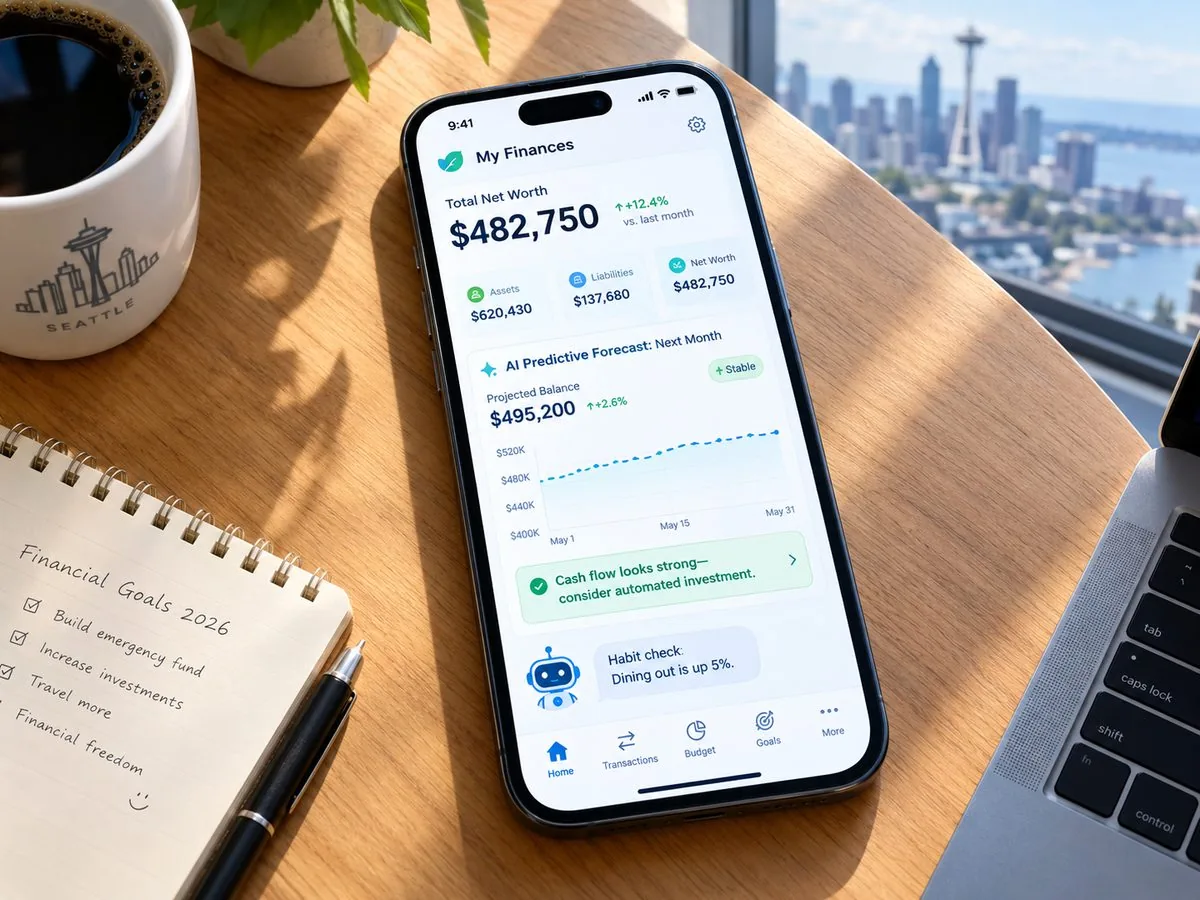
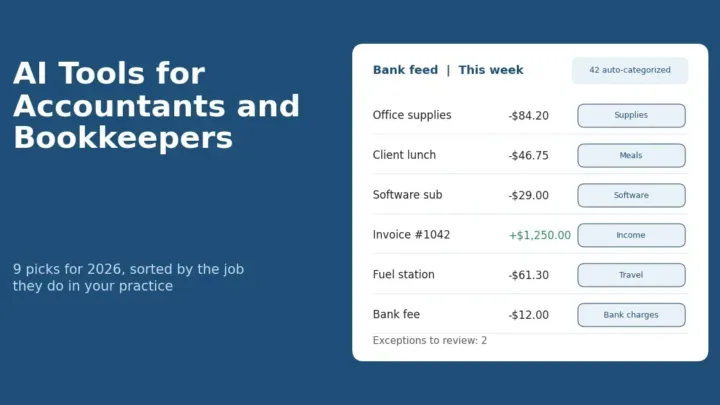
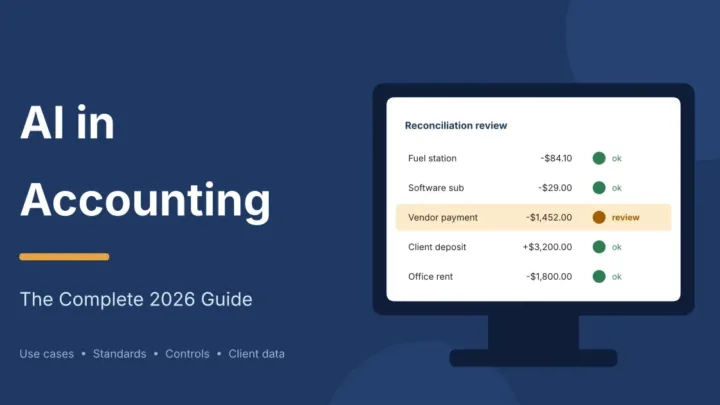
Illustrative mockup. The numbers are made up and don’t come from a real account.
What Does AI in Personal Finance Actually Mean?
The phrase covers two different things. One is budgeting tools that study your past spending and try to guess what comes next. The other is investing tools that follow set rules to build and manage a portfolio for you.
That second group often runs on plain automation. NerdWallet describes robo-advisers as services that use investing algorithms to build automated portfolios around your risk tolerance (NerdWallet). So the “AI” label doesn’t always mean a chatbot or machine learning. Sometimes it’s just well-built software.
From Spreadsheets to Forecasts
A spreadsheet tells you what already happened. You find out you overspent on takeout after the month is over. Forecasting tools try to warn you sooner.
Monarch Money, for example, scans your transactions for recurring bills and subscriptions. Its announcement of the feature says it can send a notice three days before a recurring charge is expected. A forecast is still an estimate, though. One review points out that projections vary with how steady your income and spending are.
Using AI for Budgeting and Everyday Spending
If your main goal is to see where your money goes, start with a budgeting app. These tools link to your accounts, sort your transactions, and flag oddities, like the same store charging you twice. Less typing can make a budget easier to stick with. It won’t spend less for you, though.
Not every app is as helpful as its ads suggest. In March 2025, Cleo AI agreed to pay $17 million to settle FTC claims that it misled users about how much cash they could get and made it hard to cancel subscriptions (FTC). Read the reviews and the cancellation terms before you enter your card number.
Want to compare options? Here’s our breakdown of the best AI budgeting apps in 2026.
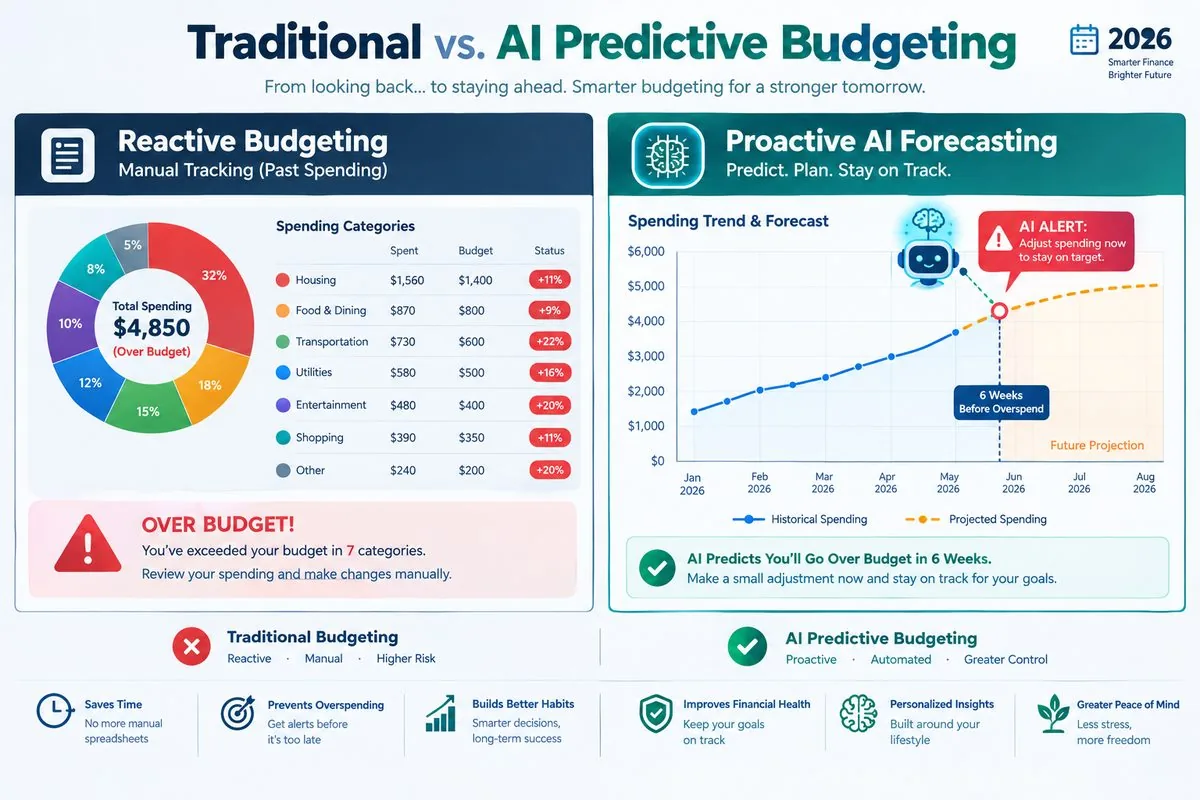
Illustration only. The chart and the six-week example use made-up numbers. Real forecasts are estimates and can be wrong.
AI in Investing: Robo-Advisers and Tax-Loss Harvesting
A robo-adviser builds a portfolio from your goals and risk tolerance, then rebalances it as markets move. Many use ETFs, which are baskets of investments that trade like stocks (SEC). Fees are where they stand out.
Betterment’s help page lists its Digital plan at 0.25% a year or $5 a month, depending on your balance and recurring deposits. Wealthfront lists a 0.25% annual advisory fee. On a $10,000 balance, 0.25% works out to $25 a year. The funds inside your portfolio carry their own small fees on top of that.
Curious how the trading works? Read how robo-advisors use AI.
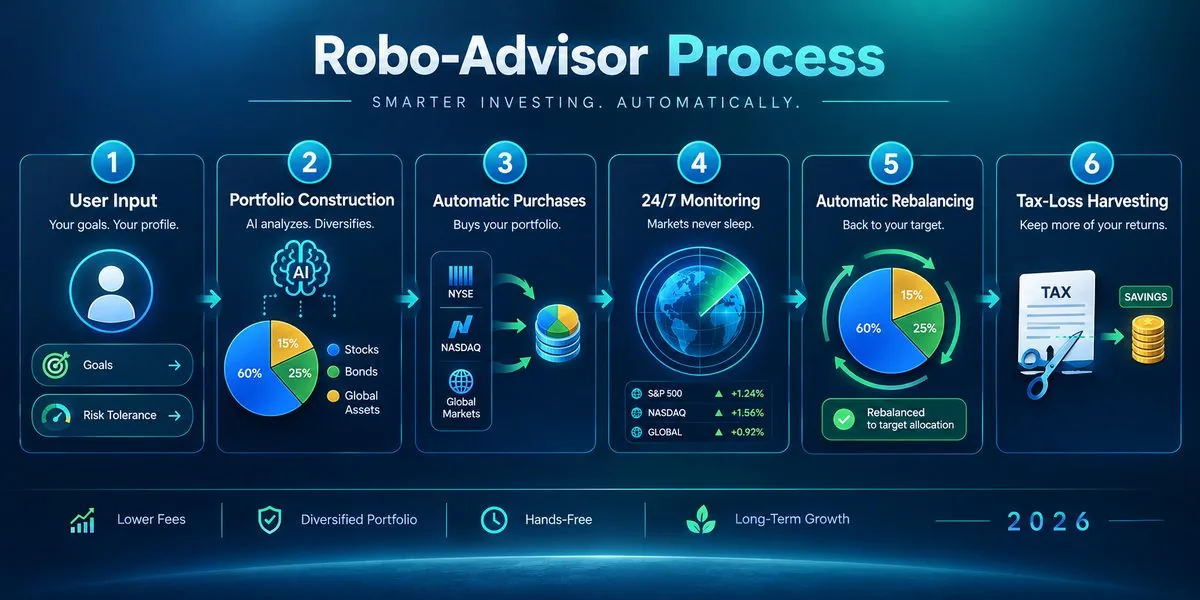
A simplified view. Steps and features differ by provider, and not every provider offers tax-loss harvesting.
Tax-Loss Harvesting: Useful, With Limits
Tax-loss harvesting means selling an investment at a loss to offset taxes on gains elsewhere in your portfolio. Some robo-advisers automate it. Wealthfront, for one, says its software keeps scanning for these chances (Wealthfront).
The rules limit how much it can do. If your losses beat your gains, you can deduct up to $3,000 of the extra against other income each year ($1,500 if you’re married filing separately), and the rest carries forward (IRS Topic 409). The wash-sale rule can also wipe out a loss if you buy a substantially identical investment within 30 days before or after the sale (IRS Publication 550).
It’s mainly a tool for taxable brokerage accounts, since an IRA doesn’t give you a loss to deduct. And it’s no sure thing. Wealthfront’s own materials say the tax results aren’t guaranteed and could be challenged by the IRS. A tax professional can tell you whether it fits your situation.
A Few AI Personal Finance Tools to Know
This isn’t a ranking or an endorsement. Fees and features change, so check each company’s current pricing before you sign up.
| Tool | Type | What to know | Sources |
|---|---|---|---|
| Monarch Money | Budgeting and forecasting | Finds recurring bills and subscriptions and can send a notice three days before one is due. Its cash flow projection estimates your balance ahead of time, and results vary with how steady your income is. | Monarch; The Penny Hoarder |
| Betterment | Robo-adviser | Digital plan is 0.25% a year or $5 a month, depending on your balance and recurring deposits. Fund fees are separate. | Betterment |
| Wealthfront | Robo-adviser | 0.25% annual advisory fee. Offers tax-loss harvesting, with no guarantee of tax results. NerdWallet’s 2026 pick for portfolio options. | Wealthfront; NerdWallet |
| Fidelity Go | Robo-adviser | NerdWallet’s 2026 pick for low-cost investing. Check Fidelity’s current fee page before you sign up. | NerdWallet |
| Schwab Intelligent Portfolios | Robo-adviser | NerdWallet’s 2026 pick for IRA investors. Check Schwab’s current pricing and terms before you sign up. | NerdWallet |
NerdWallet updates these awards regularly, so check its current list, and it notes that many providers it features are its partners.
Can AI Fully Manage Your Money?
Not on its own. Software is great at repeat jobs, like moving $100 a week into an index fund or nudging a portfolio back to its target mix. That mix is just your split between stocks, bonds, and other assets.
It’s weaker at personal trade-offs. Should you save for a wedding or pay down a low-interest student loan first? That depends on your goals, your stress level, and your family. The SEC also notes that some robo-advisers may consider only limited information about you (SEC).
| Task | Good fit for AI tools? | Why |
|---|---|---|
| Sorting transactions into categories | Strong fit | It’s repetitive and easy to check. |
| Rebalancing a portfolio | Strong fit | It follows clear rules. |
| Estate and inheritance planning | Better with a human | Family, legal, and tax details vary a lot. |
| Big life changes, like a job loss or a new baby | Better with a human | The right answer depends on your whole situation. |
This table is the author’s own assessment, not a study.
For a deeper look, see can AI manage your money?
AI vs. Human Advisors: Which One Fits You?
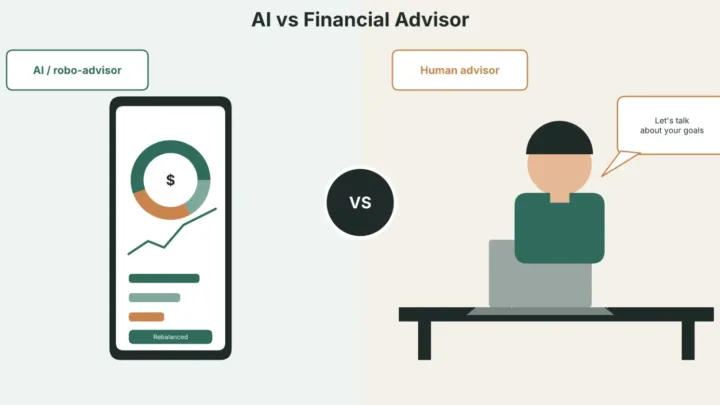
It depends on how complicated your money life is. If you’re starting an IRA or building an emergency fund, a low-cost robo-adviser may be a reasonable fit. If you’ve sold a business, inherited property, or face a tricky tax year, a human can look at the whole picture.
One point trips people up. The SEC says robo-advisers that are registered investment advisers are subject to the fiduciary obligations of the Advisers Act (SEC). So a legal duty to act in your best interest isn’t something only humans have. The real differences are judgment, planning depth, and having someone to call when markets drop.
Not everyone who gives financial advice is held to the same standard, so ask directly if they’re a fiduciary. You can also look up an investment professional with the free Check Out Your Investment Professional tool on Investor.gov (Investor.gov).
How to Start Using AI Financial Tools Safely
Before you connect anything, run through these four checks.
- Check what the app can see. Many apps link to your bank through a data connector such as Plaid. Plaid says you can view your connected apps and revoke access at any time (Plaid). Read the permissions first, and disconnect apps you no longer use.
- Confirm registration if it manages money. Search the firm on Investor.gov. Registration isn’t an endorsement, but it means the firm answers to a regulator.
- Don’t rely on AI alone. The SEC, FINRA, and state regulators warn investors to be wary of AI claims that promise guaranteed returns, and not to rely solely on AI-generated information for investment decisions (Investor.gov).
- Start small. Automate one thing first, like round-ups or a small monthly transfer. Watch how it behaves before you hand it more.
Frequently Asked Questions
Is AI safe to use for personal finance?
It can be, but safety varies by tool. Check what data an app can see, whether the firm is registered if it manages investments, and how you disconnect it. Regulators also warn about scams that use AI buzzwords to promise guaranteed returns (Investor.gov).
How is AI used in personal finance?
Mostly for four things: spotting recurring bills, forecasting your balance, running automated portfolios, and harvesting tax losses. Most of this is automation that follows rules, not a chatbot giving you advice.
What’s the best AI app for personal finance?
There’s no single best one. It depends on your goal. For investing, NerdWallet’s 2026 picks include Wealthfront for portfolio options, Fidelity Go for low cost, and Schwab Intelligent Portfolios for IRA investors (NerdWallet). Compare fees and features before you choose.
Can I use ChatGPT for financial advice?
It’s handy for explaining terms like “expense ratio” in plain English. But a general chatbot isn’t a registered adviser, doesn’t know your full situation, and can state wrong things with confidence. Regulators say not to rely solely on AI-generated information when you invest (Investor.gov).
Final Thoughts
AI can take busywork off your plate. It can flag a forgotten subscription, warn you about a tight month, or rebalance a portfolio while you sleep. What it can’t do is know your whole life, and it doesn’t carry the risk for you.
Treat these tools as helpers, not bosses. Check the fees, check the registration, and bring in a human when the stakes get high. Pick one small task to automate this week, like tracking your subscriptions, and use our guide to the best AI budgeting apps to choose a tool.
Related reading: how to use AI to improve your credit score.
Related Reading
- AI Investing Apps for Beginners: How They Work (2026): if your goal is investing rather than budgeting.
- How to Use ChatGPT for Budgeting (Step-by-Step + Prompts): a free way to start with prompts.
- How to Use AI to Save Money: 9 Practical Ways (2026): quick wins once you have a tool.
Was this article useful?
Thanks, that helps us decide what to write next.
Spotted a mistake? Report an error and we will fix it, with a dated correction note.
Disclaimer. This article is general information, not financial, tax, or investment advice. Figures describe specific cases at specific dates. Talk to a licensed professional before acting on anything here. Full disclaimer.